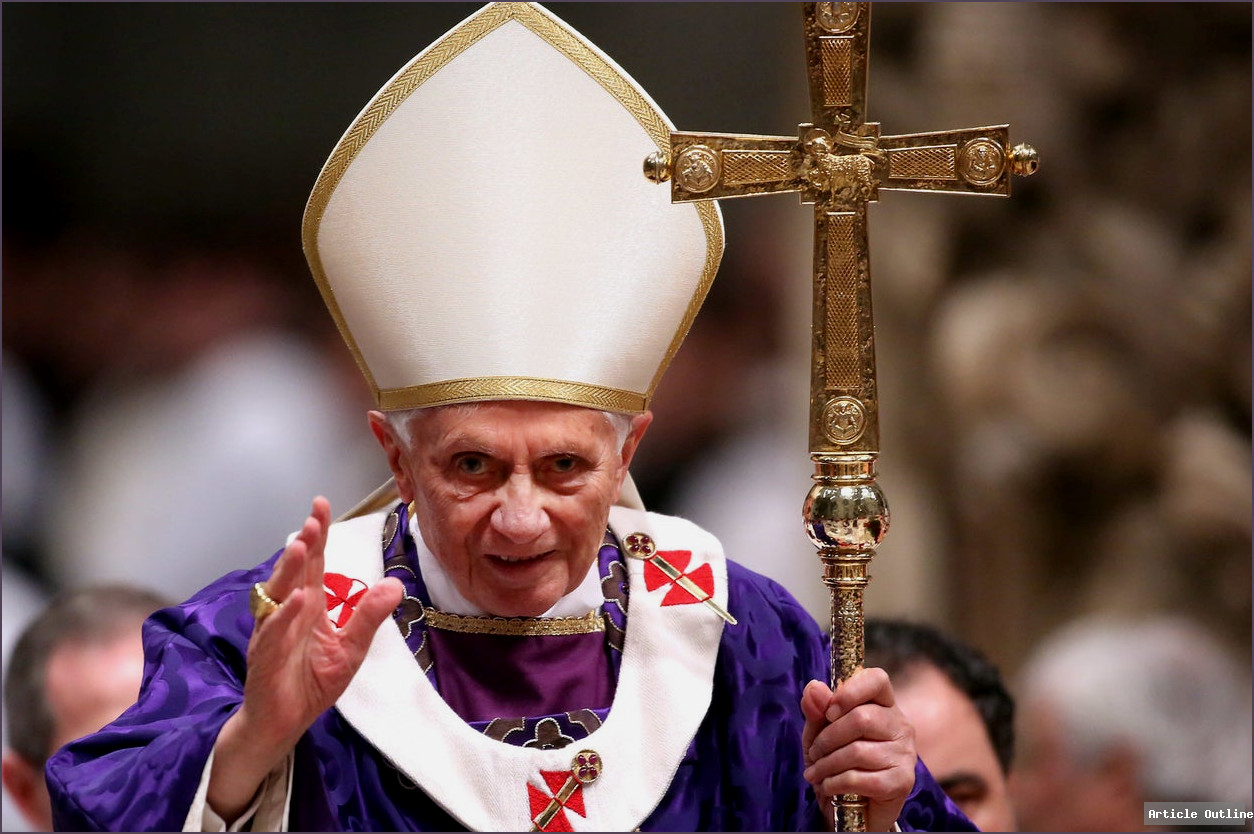
Pope Benedict XVI’s passing at age 95 closes the chapter on one of the most complex and controversial papacies in modern Catholic history. Beyond the headlines of his resignation—the first in over six centuries—Benedict’s tenure and legacy force us to confront deep questions about leadership, accountability, and the evolution of one of the world’s oldest institutions.
Why This Matters
Benedict’s papacy wasn’t just about religious doctrine—it was a turning point for the Catholic Church’s handling of internal crises and public trust. His resignation shattered a centuries-old tradition, signaling that even the highest spiritual leader is not immune to the pressures of modern leadership. At a time when faith in institutions is eroding globally, Benedict’s choice to step down—citing age and capacity—set a precedent for humility and self-awareness in leadership, a lesson both religious and secular leaders would do well to heed.
What Most People Miss
- Benedict was deeply involved in addressing abuse scandals long before he became pope. As head of the Congregation for the Doctrine of the Faith (CDF), he centralized abuse investigations, taking power away from local dioceses that had failed to act.
- Despite defrocking hundreds of priests, critics argue he fell short on transparency—with investigations remaining secret and many survivors left without justice or closure.
- His resignation was not just about health—it was also about the weight of scandal, internal Vatican politics, and the realization that the papacy needed new energy to face modern challenges.
Key Takeaways
- Historic Resignation: Benedict XVI was the first pope since Gregory XII in 1415 to resign voluntarily, highlighting the extraordinary nature of his decision.
- Mixed Legacy on Abuse: He made strides in confronting abuse but left many calling for greater transparency and stronger action.
- Vatileaks and Vatican Intrigue: The infamous Vatileaks scandal exposed deep divisions and corruption inside the Holy See, casting a shadow over his final years as pope.
- Longevity: At 93, Benedict became the oldest-living pope in recorded history, witnessing seismic shifts in the Church even after his resignation.
Timeline of Key Events
- 2001: John Paul II empowers the CDF (led by Ratzinger) to centralize abuse investigations.
- 2005: Cardinal Ratzinger becomes Pope Benedict XVI amid growing abuse revelations.
- 2012: The Vatileaks scandal rocks the Vatican, revealing internal power struggles.
- February 2013: Benedict announces his resignation, citing age and strength.
- April 2014: Public appearance at the canonization of Popes John XXIII and John Paul II.
- September 2020: Becomes the longest-living pope in history.
- December 2022: Passes away at age 95.
Expert Commentary
“In the Church’s entire history, no one knew more but did less to protect kids than Benedict,” said the Survivors Network of Those Abused by Priests (SNAP) in a 2013 statement. This sharp critique underscores the dilemma: Can incremental reforms ever repair trust once it’s shattered?
Still, Benedict’s willingness to admit limits—stepping down when he felt unable to serve—was a rare act of vulnerability from a pope. In an era where leaders often cling to power, his resignation is both a cautionary tale and a beacon for future reform.
The Bottom Line
Benedict’s legacy is a study in contrasts. He was a theologian and traditionalist who faced modern crises head-on, sometimes faltering, sometimes pioneering. His death invites the Church and the world to reflect: True leadership is not just about holding power, but knowing when—and how—to let it go.