Full-size SUVs have always been about more than just getting from point A to B—they’re rolling statements about family, freedom, and sometimes, sheer intimidation. But what does a deep dive into the 2003 titans—the Chevrolet Tahoe, Ford Expedition, GMC Yukon XL, and Toyota Sequoia—reveal about the American psyche and the SUV arms race? Let’s break down not just the specs, but the subtle truths behind these suburban tanks.
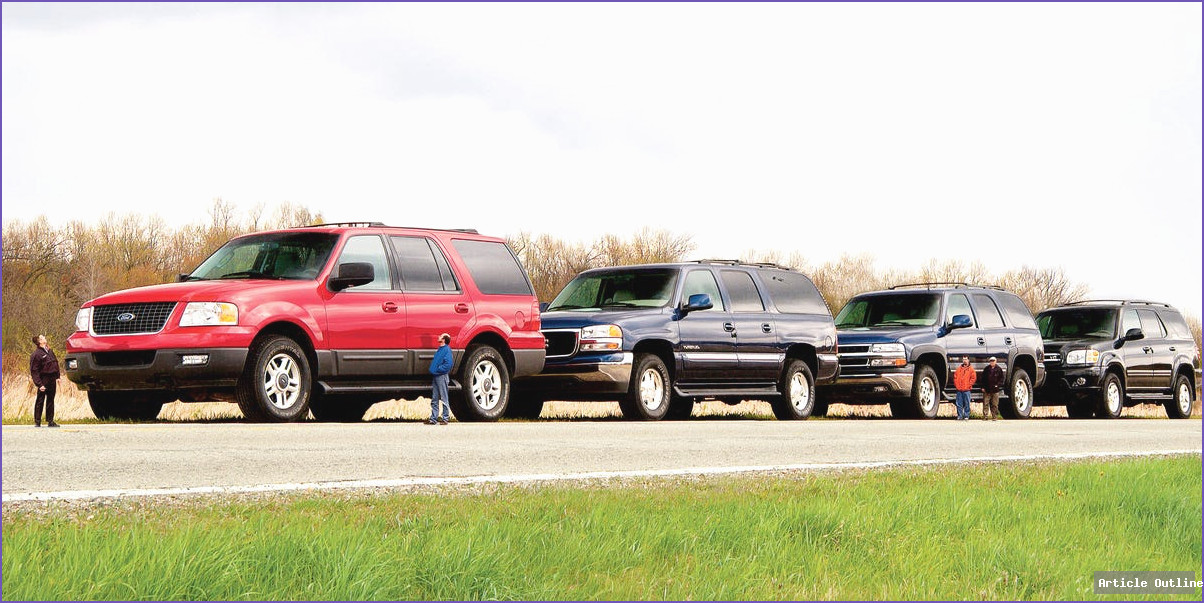
Back in 2003, nearly 850,000 full-size SUVs thundered out of dealership lots, accounting for 10% of all light trucks sold in the U.S. That’s not just a stat—it’s a cultural footprint. These vehicles didn’t just transport families; they redefined what it meant to be an American driver, blending luxury and utility in ways few segments had managed before.
Why This Matters
- SUVs shape not just driveways, but the automotive industry’s direction. The 2003 models set standards for comfort, safety, and brawn that still influence today’s designs.
- Their popularity foreshadowed the eventual dominance of SUVs over sedans—a trend still snowballing two decades later.
- Safety, space, and status continue to drive SUV sales worldwide, but the balance between capability and excess remains a hot debate.
What Most People Miss
- Interior engineering was the real battleground, not just horsepower or towing. The Ford Expedition’s adult-friendly third row and fold-flat seats were revolutionary—features still sought after today.
- Not all powertrains are created equal. The Toyota Sequoia’s Lexus-derived V8 was smooth but underpowered, while the Tahoe’s 5.3-liter V8 hit a sweet spot for both performance and refinement.
- Handling and composure are just as important as muscle. The GMC Yukon XL, despite its size, surprised with its ride quality—thanks to its AutoRide suspension system, a precursor to today’s adaptive suspensions.
Key Takeaways
- The Tahoe’s balance of size, performance, and maneuverability made it the all-rounder—a formula that explains Chevy’s continued SUV dominance.
- Ford’s Expedition innovated with safety and packaging, but its weight and underwhelming engine held it back.
- Toyota’s Sequoia nailed refinement and reliability, but was hamstrung by overzealous traction control and low towing capacity.
- GMC Yukon XL proved that sometimes bigger is better, but at the cost of daily practicality—parallel parking nightmares included.
Pros and Cons Breakdown
| Model | Pros | Cons |
|---|---|---|
| Tahoe | Strong engine, smooth ride, easy to live with | Cramped third row, outdated interior plastics |
| Expedition | Innovative packaging, best emergency handling, great value | Overweight, underpowered, jittery ride |
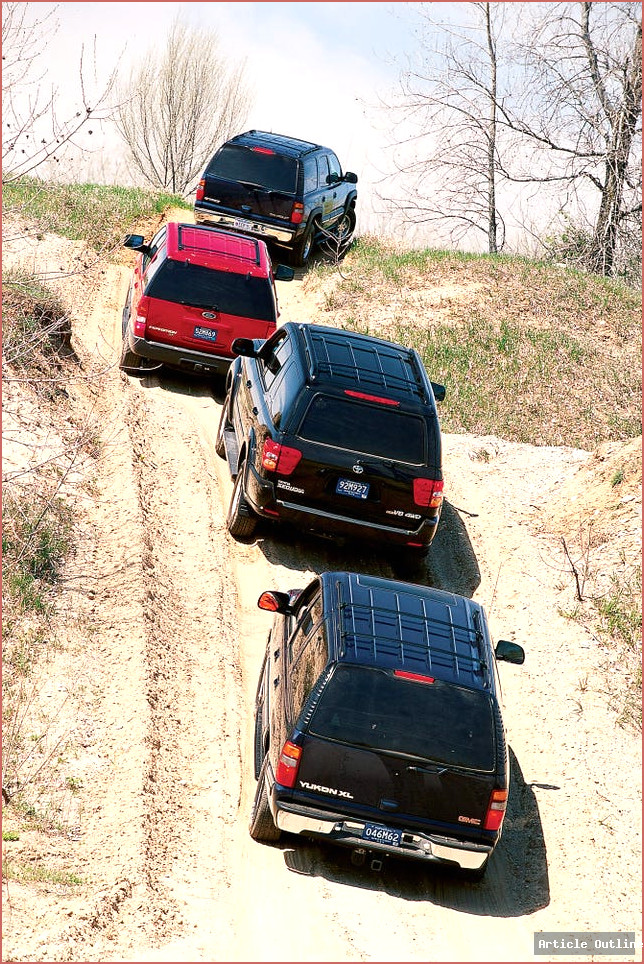
| Yukon XL | Roomiest, smooth highway ride, towing king | Too large for many, off-road scraping, tough to park |
| Sequoia | Refined, reliable, feature-rich | Weak tow rating, traction control limits off-road fun |
Expert Commentary: What This Means for Modern Buyers
“It’s easy to look back and chuckle at the gas-guzzling behemoths of 2003, but many of the innovations—fold-flat seats, adaptive suspensions, multi-mode 4WD—set the template for today’s SUVs. The challenge now is how to deliver the same utility and comfort with greater efficiency and environmental responsibility.”—Automotive Industry Analyst
Industry Context and Comparisons
- Today’s full-size SUVs are safer, more efficient, and tech-laden, but the essential formula remains unchanged: space, status, and versatility.
- In 2003, these SUVs averaged 13-14 mpg. Fast forward to 2024, and hybrids like the Toyota Sequoia Hybrid boast over 20 mpg—a sign of progress, but not a revolution.
- Globally, the U.S. remains the full-size SUV stronghold. Europe’s tastes have shifted to crossovers, while China’s market is rapidly expanding for large SUVs, driven by similar desires for space and prestige.
Timeline: The Evolution of Full-Size SUVs
- 1935: Chevrolet debuts the Suburban Carryall—ancestor of all modern SUVs
- 1990s: SUVs explode in popularity, driven by safety and versatility trends
- 2000s: Full-size SUVs become status symbols and family haulers
- 2010s: Efficiency and tech take center stage, crossovers gain ground
- 2020s: Electrification and advanced safety reshape the segment, but size and luxury still rule
The Bottom Line
The 2003 SUV comparison isn’t just nostalgia—it’s a mirror reflecting what buyers value: comfort, capability, and image. While tech and efficiency have improved, the core appeal remains. Modern shoppers should look beneath the surface—at packaging, handling, and real-world usability—because, as history shows, those are the features that stand the test of time, not just the biggest grille or the highest tow rating.