The 2026 Porsche 911 Turbo S has just reset the rules of the performance car game—and not just by being quick. It has stormed past legends, matched hypercars, and left a $1.5 million icon in its rearview mirror, all while wearing a (relatively) sensible price tag. But why is this so much more than just another fast car headline? Let’s dig into the numbers, the context, and the overlooked insights that make this 911 a milestone for the entire automotive industry.
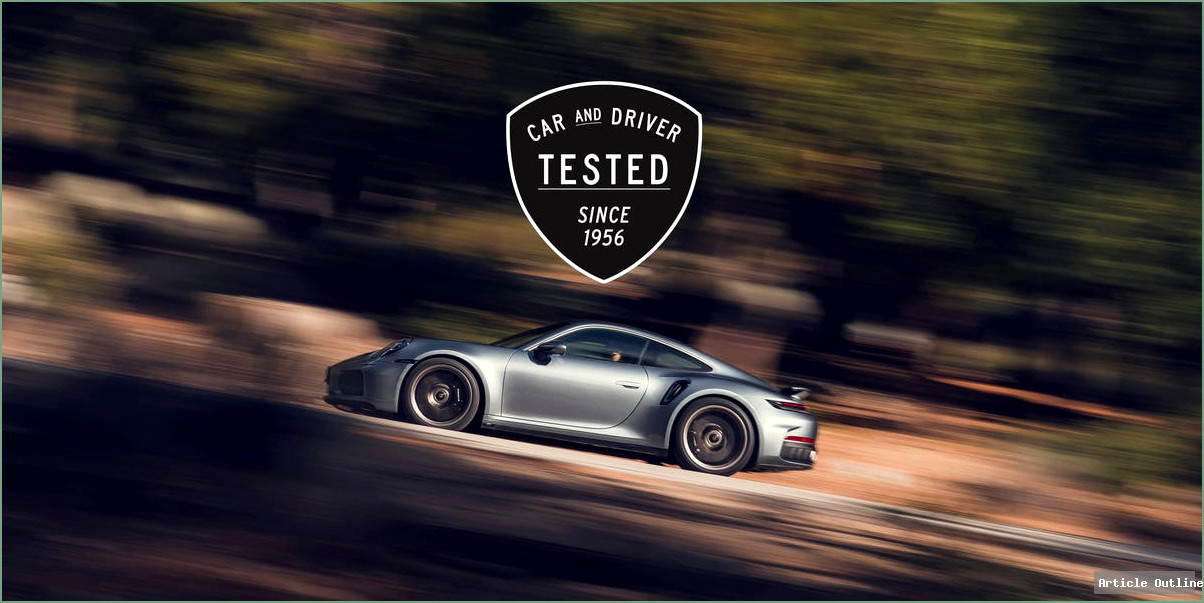
The 2026 Porsche 911 Turbo S rockets from 0-60 mph in just 2.0 seconds, tying the Ferrari SF90 Stradale as the quickest gas-powered car Car and Driver has ever tested. That’s not just quick—it’s a paradigm shift. For context, this Porsche, with its hybridized 701 hp flat-six, overtakes its own $1.5 million sibling, the 918 Spyder, which was considered an untouchable hypercar a decade ago. And it does it for less than a fifth of the price.

Why This Matters
- Hybrid tech is now mainstream in high-performance sports cars—no longer just a party trick for ultra-limited hypercars.
- Performance democratization: The 911 Turbo S offers acceleration on par with, or faster than, many exotics costing 2-6x as much.
- Engineers are extracting mind-bending speed from familiar platforms, showing that relentless innovation can keep icons like the 911 at the cutting edge.
What Most People Miss
- It’s not just the horsepower—traction and usable power delivery are everything. The Corvette ZR1X packs a wild 1,250 hp, yet can’t match the Porsche to 60 mph due to traction limitations. Real-world performance is about getting power to the ground, not just spec sheet bragging rights.
- The price-to-performance ratio here is unprecedented. At $286,180 as-tested, the Turbo S makes the $1.5 million 918 Spyder look practically slow for the money.
- Hybrid power is now a necessity, not just a novelty. Both the Porsche and Ferrari use hybrid systems, but Porsche does it with a single electric motor versus Ferrari’s trio, showing there’s still room for clever engineering over brute force.
Key Takeaways
- 0-60 mph in 2.0 seconds: Ties with the Ferrari SF90 Stradale, fastest gas-powered time ever tested by Car and Driver.
- Beats the 918 Spyder to 60 mph, a car that cost nearly $1 million more when new.
- Outpaces the Corvette ZR1X to 60 mph, despite the Chevy’s huge horsepower advantage.
- Quarter-mile in 9.7 seconds at 142 mph: Just a hair behind the Ferrari and equal to the 918 Spyder, despite lower top-end speed.
Context: How Did We Get Here?
- In 2015, the Porsche 918 Spyder’s 0-60 time of 2.1 seconds was considered almost superhuman. Now, a regular-production Porsche road car bests it for a fraction of the price.
- The Ferrari SF90 Stradale, at over $500,000, was the only other car to hit 0-60 in 2.0 seconds—until the 2026 911 Turbo S.
- Hybridization is rapidly becoming the standard, not only for emissions, but as the secret sauce for next-level acceleration.
Pros and Cons Analysis
- Pros:
- Blistering acceleration with real-world usability
- Relatively attainable price for its performance bracket
- Heritage and daily drivability of a 911
- Cons:
- Falls behind rivals at extremely high speeds (150+ mph)
- Still a high price for most enthusiasts
- Purists may lament the move toward hybridization
What’s Next and What Does It Mean for Enthusiasts?
- We are living in a golden age of hybrid performance, where traditional and new tech combine for astonishing results.
- Expect even more mind-blowing numbers as manufacturers embrace electrification and software-driven performance.
- While these numbers are great for headlines, the real question: How much faster can we go before physics (and public roads) say “enough”?
“Porsches are expensive, but considering the 911 Turbo S’s absurd performance, its $272,650 starting price feels like a bargain.” — Car and Driver
The Bottom Line
The 2026 Porsche 911 Turbo S isn’t just the new speed king—it’s the latest proof that performance, technology, and value can coexist in a single package. If you want hypercar performance with supercar practicality and sports car usability, the new Turbo S is your answer. The next decade will be wild.