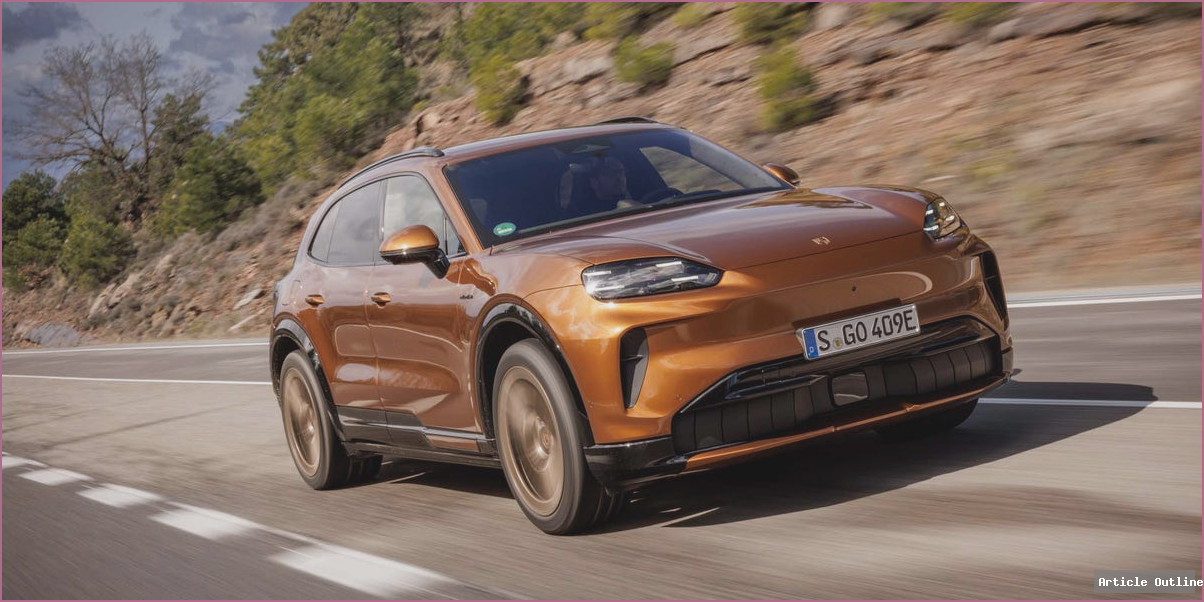
The 2026 Porsche Cayenne Electric is not just another high-end EV—it’s a statement. With jaw-dropping specs and a level of versatility that challenges everything you expect from a family SUV, Porsche’s latest offering is rewriting the rules for what electric SUVs can deliver.
Why This Matters
The arrival of the Cayenne Electric signals a seismic shift in the luxury SUV market. We’re witnessing the convergence of supercar performance, luxury comfort, and true electrification—all in a package meant for families. This isn’t just about Porsche flexing its engineering prowess; it’s about redefining the expectations for what an SUV can be in an era where sustainability meets speed.

- Acceleration figures once reserved for hypercars are now available in a five-seater SUV. The Turbo variant’s 0-60 mph in an estimated 2.2 seconds puts it in the league of the Tesla Model X Plaid and the Lamborghini Urus Performante.
- Charging infrastructure and range become critical talking points, with Porsche delivering up to 340 miles of EPA-estimated range and 800-volt charging capabilities—both key for making electric SUVs genuinely practical.
- Luxury and tech innovation are front and center, from the curved OLED touchscreens to adaptive air suspension and advanced regeneration systems.
What Most People Miss
While the headlines scream about horsepower, there’s more beneath the surface:
- Regenerative braking can recapture up to 600 kW—this is not just about efficiency, but also about creating a more seamless, engaging driving experience where the transition from electric to friction braking is imperceptible.
- The interior design isn’t just luxurious, it’s ergonomically thoughtful. The wrist pad under the touchscreen is a simple, ingenious touch that shows Porsche’s attention to real-world usability.
- Active suspension tech like Porsche Active Ride flattens out body motions to a degree usually reserved for sports cars, not SUVs weighing over 5700 lbs.
- Porsche hasn’t sacrificed off-road competence, even if most buyers never leave the pavement. The Cayenne Electric’s ability to handle muddy ruts and steep inclines isn’t just marketing—it matters for brand credibility and versatility.
Key Takeaways
- Performance: Turbo model boasts up to 1,139 hp & 1,106 lb-ft, 0-60 mph in 2.2 s (est.), 162 mph top speed.
- Range & Charging: 108 kWh battery, 330–340 miles range, 800-volt architecture, up to 390 kW DC fast charging.
- Tech & Comfort: Curved OLED display, adaptive air suspension, Porsche Active Ride, customizable digital sound profiles.
- Price: Starts at $111,350 for base, $165,350 for Turbo—costly, but arguably peerless in its segment.
Industry Context & Comparison
Look at the landscape: The Tesla Model X Plaid, BMW iX M60, and Mercedes EQS SUV are all vying for the luxury EV SUV crown. But Porsche’s approach is unique—where Tesla leans on tech minimalism and straight-line speed, and BMW/Mercedes focus on comfort and luxury, Porsche blends all three with a distinctly driver-focused edge. The Cayenne Electric’s dynamic poise, handling, and tactile feedback set a new benchmark—even among its gas-powered siblings.
Pros and Cons Analysis
- Pros:
- Supercar performance in an SUV body
- Innovative tech and user-friendly cabin
- Impressive real-world range and ultra-fast charging
- Retains Porsche’s signature driving feel
- Genuine off-road capability (even if rarely used)
- Cons:
- Six-figure price puts it out of reach for many
- Storage in the cabin is limited compared to rivals
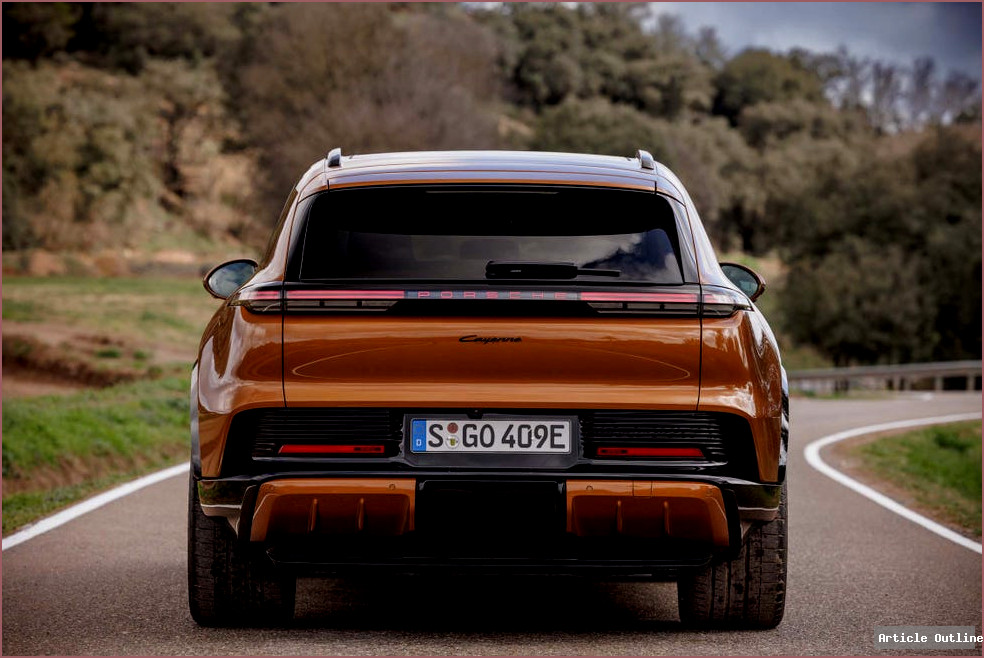
- Hefty curb weight (5,750–6,200 lbs)
- Overkill for typical family-SUV needs (but that’s the point…)
The Bottom Line
The 2026 Porsche Cayenne Electric is not just an electric SUV, it’s a kinetic masterpiece. It tears down the notion that electrification means compromise. Instead, it’s a rolling showcase of how far technology, luxury, and performance can go when a brand like Porsche sets its sights on the future. The biggest challenge? Convincing buyers that a family SUV really needs to out-accelerate most supercars—and making sure the infrastructure is ready to support its potential.