When disaster strikes—a hurricane, wildfire, or catastrophic building collapse—there’s one group of professionals who run toward the chaos while the rest of us run away: America’s elite Urban Search and Rescue (USAR) teams. These highly trained specialists save lives under the most extreme conditions, yet their future hangs by a thread due to funding and political uncertainty. Let’s go beyond the headlines and explore what most people miss about the lifeline that is USAR.
Why This Matters
- Climate change is turbocharging America’s disaster season. In 2024, FEMA USAR teams responded to nine major disasters—the joint highest on record since 1999.
- Lives are on the line. These teams are often the only hope for people trapped beneath rubble or swept away by floods when local resources are overwhelmed.
- USAR isn’t just another government program—it’s a backbone of national emergency response. With 28 task forces, each 200-strong, they provide a unified, rapidly deployable force for the whole country.
What Most People Miss
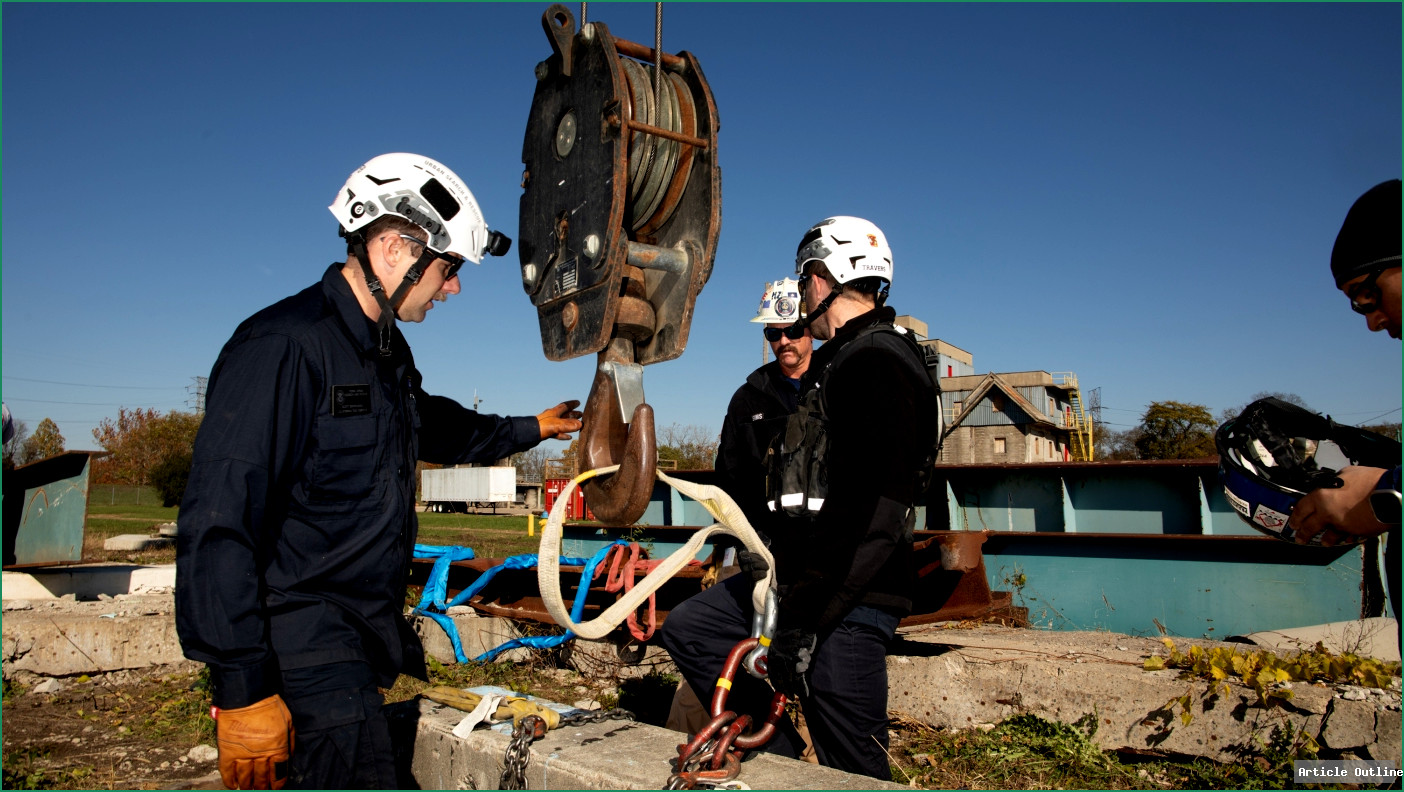
- Mathematics saves lives. USAR members aren’t just swinging sledgehammers—they’re doing complex calculations under pressure, figuring out how to safely lift tons of concrete, and using geometry to pinpoint victims’ locations.
- There’s no backup for these heroes. As Mike Muhl of Ohio Task Force 1 says, “There’s no 911 for us.” When USAR is deployed, they’re the cavalry—there’s no one else to call.
- Training is relentless—and federally standardized. Every member undergoes rigorous, uniform training to ensure teams from across the country can work seamlessly together, a system that’s rare worldwide.
- Chronic underfunding is undermining readiness. USAR receives about $40 million a year—half what experts estimate is needed. Teams are forced to make hard choices, like whether to repair critical trucks or maintain vital warehouses.
Key Takeaways
- Elite but Overlooked: The USAR network is recognized globally for its skill and coordination, but the American public and lawmakers often take it for granted—until disaster hits their own backyard.
- Political Uncertainty = Operational Risk: Proposed overhauls to FEMA and new spending bottlenecks threaten to slow or prevent rapid deployment, as seen in Texas floods where deployment delays may have cost lives.
- Return on Investment: As Ken Pagurek (former FEMA USAR chief) says, “No tax-funded program in the U.S. provides more return on investment for the public.” Every dollar spent on readiness saves exponentially more in lives and recovery costs.
Comparisons and Context
- Internationally, the U.S. sets the gold standard for USAR networks—many countries rely on military or ad-hoc responses instead.
- Climate-fueled disasters are outpacing funding increases.
- USAR teams responded to the Surfside condo collapse (2021), Maui wildfires (2024), and deadly hurricanes—events that made headlines worldwide.
Pros and Cons Analysis
- Pros:
- Highly trained, rapidly deployable teams
- Nationwide interoperability—teams can swap staff and equipment seamlessly
- Brings expertise back to local fire departments
- Cons:
- Stagnant or decreasing funding in the face of rising disaster frequency
- Political infighting and bureaucratic delays threaten operational speed
- Heavy physical and emotional toll on responders
Action Steps & Practical Implications
- Support policies that prioritize disaster readiness funding—not just for your backyard, but for all Americans.
- Raise awareness about what USAR teams do. If you know a firefighter, ask about their training and deployment experiences.
- Advocate for transparency in FEMA and DHS operations, especially when lives are at stake.
Expert Quotes with Context
“We have a little saying, ‘It’s up to us.’ Because we don’t have anyone else to call. There’s no 911 for us.”
– Mike Muhl, Ohio Task Force 1
“We give off one persona, because we like the rough-and-tumble rock-breaker image. But they’re actually doing math and algebra out there. There’s a true scientific component to what they’re doing.”
– Mike Muhl
“It’s a pretty cool win-win situation. The same people responding to these disasters are the same people responding on your local fire engine back home.”
– John Morrison, Fairfax County firefighter
The Bottom Line
America’s elite Urban Search and Rescue teams are a national treasure—one that’s easy to overlook until you desperately need them. As disasters grow in frequency and scale, our investment in their future is not just a budget line—it’s a bet on our collective resilience. Supporting USAR isn’t about politics. It’s about survival, science, and the spirit of service in the face of chaos.

Sources:
- Hurricane Helene rescues
- Hurricane Milton rescues
- Lahaina wildfires
- Los Angeles wildfires
- Surfside condo collapse
- FEMA elimination FAQ
- Texas floods FEMA bottleneck
- DHS rebuttal on FEMA response
- CNN report on FEMA USAR chief resignation
- Source