When a name makes headlines for two radically different reasons, it forces us to confront uncomfortable questions about justice, redemption, and the power of art. Bassem Khandaqji, once imprisoned for planning a deadly bombing, is now celebrated as one of the Arab world’s top novelists. His story isn’t just about personal transformation—it’s a reflection of the tangled narratives that define the Israeli-Palestinian conflict and the human capacity for change.
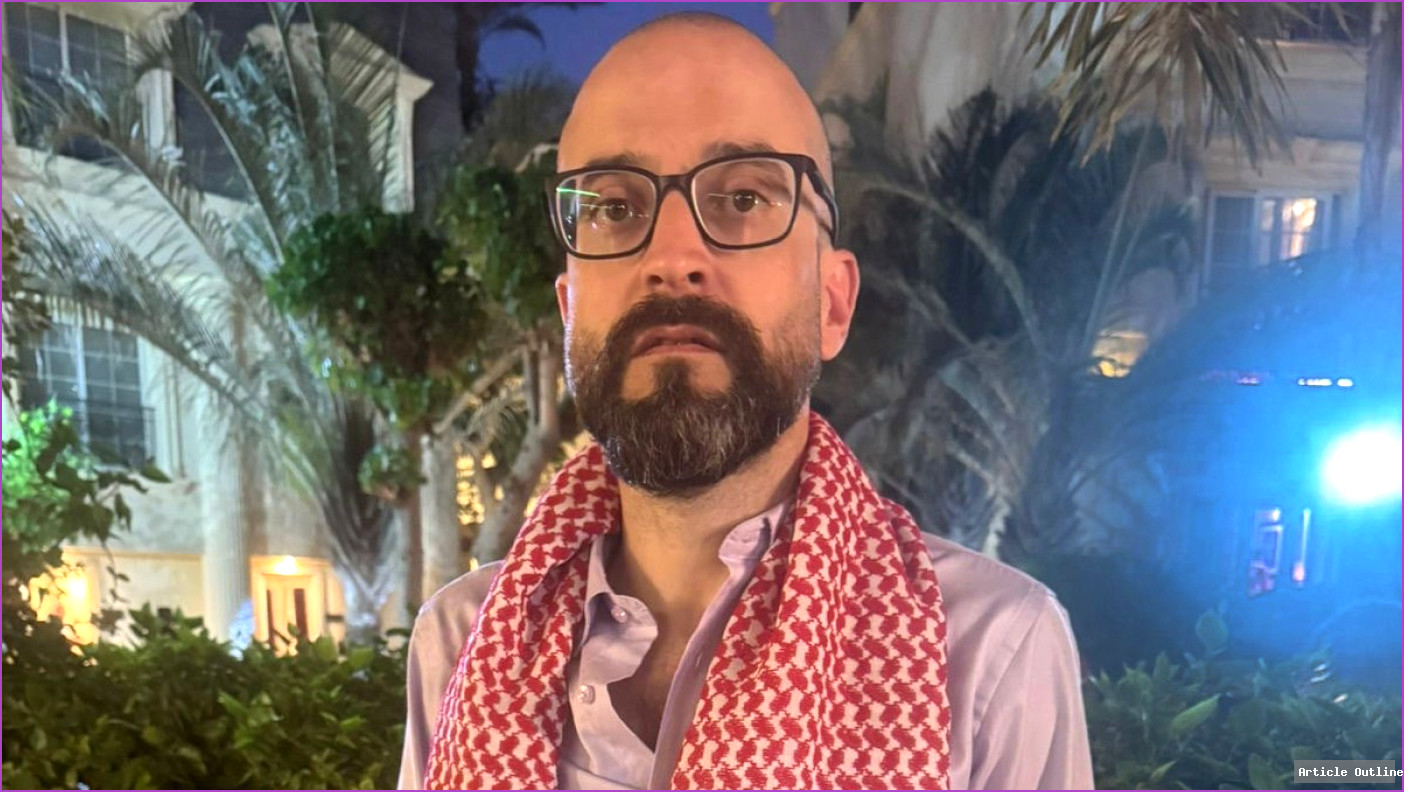
Khandaqji spent over two decades behind Israeli bars for his role in a 2004 suicide bombing that claimed three Israeli lives. But it’s what happened during his incarceration—and since his recent release under a ceasefire deal—that elevates his story beyond the black-and-white headlines.

Why This Matters
- Khandaqji’s journey blurs boundaries between perpetrator and creator, violence and redemption, villain and visionary. It challenges our understanding of how societies reckon with those who have committed grave crimes but also contributed meaningfully to culture.
- His award-winning novel, written in prison, invites readers to see both Palestinians and Israelis as multidimensional people—not just soldiers or villains. This is a radical departure from much of the region’s literature and rhetoric.
- The fact that Israeli authorities released Khandaqji, but exiled him to Egypt, underscores the ongoing dilemmas of justice, security, and reconciliation in post-conflict societies.
What Most People Miss
- Literature as Resistance—and Bridge: Khandaqji deliberately writes Israeli characters not as caricatures, but as people. He aims to create a “new ethic discourse”—a gutsy move in a polarized environment.
- The Prison as a Literary Crucible: Palestinian prison literature is a genre unto itself, but Khandaqji’s work stands apart by focusing on shared histories and identities, not just the suffering of prisoners.
- Transformation Without Forgetting: While Khandaqji says he would not choose violence again, he expresses no regret for his past—a nuance that complicates simplistic redemption narratives.
- Exile’s Hidden Trauma: Released prisoners like Khandaqji are banished from their homeland, cut off from family and roots. Freedom, in this context, comes with a steep emotional cost.
Key Takeaways
- Khandaqji’s story is not just about one man, but about the power of narrative to humanize and, perhaps, heal.
- Art can flourish in the harshest conditions—sometimes, because of them. Khandaqji wrote novels in secret, even composing one entirely in his head after losing access to pen and paper.
- The wider context: Hundreds of thousands of Palestinians have cycled through Israeli prisons. Their writings form a critical, if underappreciated, part of the modern Arab literary canon.
- The paradox of release: Over 100 long-term prisoners were exiled to Egypt as a condition of their freedom. Many remain isolated from their families, highlighting the complexities of post-conflict reintegration.
Timeline: Bassem Khandaqji’s Remarkable Path
- 2004: Arrested for planning a suicide bombing in Tel Aviv.
- 2005: Sentenced to three life terms; delivers provocative address in court.
- 2004–2024: Incarcerated; writes multiple novels, studies political science.
- 2024: Wins the International Prize for Arabic Fiction while still in prison.
- October 2024: Released under Gaza ceasefire deal; exiled to Egypt.
- 2025: His novel, A Mask the Color of the Sky, set for release in English.
Pros & Cons Analysis: The Power—and Limits—of Literary Redemption
- Pros:
- Shows personal growth and transformation are possible, even in harsh conditions.
- Brings nuanced Palestinian voices to global literary audiences.
- Promotes empathy by challenging one-sided narratives.
- Cons:
- For many victims and their families, literary achievement does not erase the pain of lost lives.
- Questions linger about remorse and true rehabilitation.
- Freedom for perpetrators, even when exiled, can be deeply divisive.
Industry Context: Palestinian Prison Literature and Global Trends
- Prison writing has historically shaped national identity—think of Nelson Mandela’s Long Walk to Freedom or Antonio Gramsci’s Prison Notebooks.
- The International Prize for Arabic Fiction has been a launchpad for regional voices, but rarely has a winner’s backstory been as controversial as Khandaqji’s.
- Globally, debates about whether art can—or should—redeem the artist are intensifying, from Hollywood to Nobel laureates.
“I try to convince my readers by my text that I’m a new man now.” — Bassem Khandaqji, after his release
The Bottom Line
Bassem Khandaqji’s story is not about simple answers. It forces us to wrestle with the hardest questions: Can art change a life? Should it? And can a person who caused great harm ever be fully accepted, even if they create works of great beauty?
In the end, his journey is a microcosm of the broader struggle for justice, memory, and reconciliation in the Middle East and beyond. Literature, at its best, makes us see the world—and each other—anew.