When Vladimir Putin publicly promised to keep Russian oil flowing to India—no matter what Washington says—he wasn’t just talking barrels and pipelines. He was sending a neon-lit message to the world: the India-Russia partnership is not up for negotiation, even under immense US pressure. The implications of this bold stance are far-reaching, extending from the fuel pumps of Mumbai to the policy rooms of Brussels and Washington.
Why This Matters
- Energy security is now a cornerstone of India’s foreign policy—and Russia is its most reliable pillar, regardless of US sanctions or tariffs.
- Putin’s declaration isn’t just about oil. It’s about demonstrating Moscow’s resilience and ability to build alliances outside the Western sphere—even as the Ukraine war rages and the West tightens its sanctions regime.
- Global energy markets are being redrawn. With India and China doubling down on Russian supplies, the traditional West-centric energy order is fracturing.
What Most People Miss
- India’s leverage is rising: As the world’s fastest-growing major economy, India’s energy appetite is surging. The West needs India as much as India needs oil.
- US pressure can backfire: The 25% import tariff imposed by President Trump was meant to squeeze New Delhi. Instead, it’s pushed India to double down on Russia and prompted joint India-Russia economic projects that target $100bn trade by 2030.
- Defence ties are quietly evolving: While oil hogs the headlines, India and Russia are also reshaping their defence relationship—joint production of advanced weaponry could bypass Western sanctions entirely.
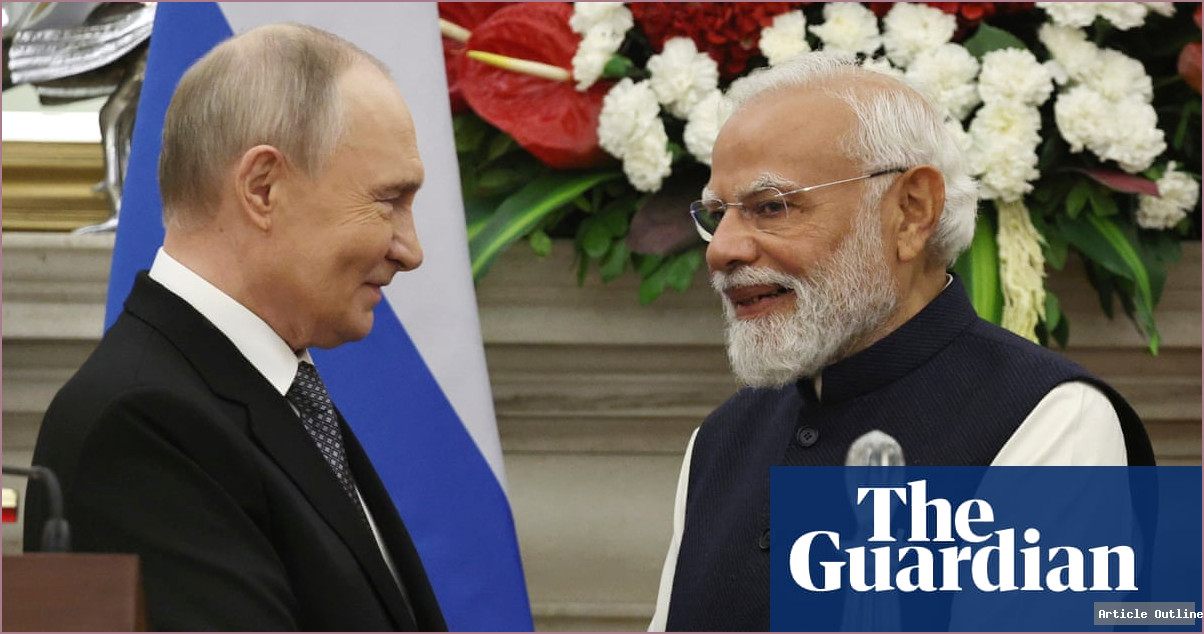
- Geopolitical optics: Modi greeting Putin off the plane and their warm embrace was a deliberate display of diplomatic solidarity—one that signals to other countries (and China) that India is no pushover.
Key Takeaways
- India-Russia ties are “resilient to external pressure”, as both leaders proudly declared. This is more than rhetoric—it’s a strategic statement to the world.
- Russia remains India’s top defence supplier, but the partnership is evolving from arms buyer-seller to co-producers of military technology.
- The two countries are targeting $100 billion in annual trade by 2030, doubling current levels through new economic and energy deals.
- Western sanctions may be losing their bite in a multipolar world where India, China, and others can make their own rules.
Industry Context & Comparisons
- Since 2022, India has increased its imports of Russian oil by over 800%, taking advantage of steep discounts as Europe shunned Russian crude.
- Similar to China’s approach, India is leveraging its market size to secure favorable deals amid global volatility.
- The US and EU’s attempts to isolate Russia economically are being circumvented by Asia’s two largest economies—signaling a major shift in global energy flows.
Action Steps & Practical Implications
- For policymakers: Recognize that punitive tariffs may push emerging economies closer to alternative powers, undermining Western influence.
- For investors: Watch for new joint India-Russia ventures in energy and defense sectors—potential growth spots as trade accelerates.
- For global energy markets: Prepare for continued volatility as supply chains are rerouted and new alliances shape price and availability.
Putin: “We are ready to continue ensuring the uninterrupted supply of fuel for the rapidly growing Indian economy.”
Translation? The Moscow-Delhi pipeline isn’t drying up anytime soon.
The Bottom Line
This is more than a tug-of-war over oil—it’s a test of a new world order, where alliances are shifting, sanctions are being challenged, and emerging powers are asserting their independence. India’s embrace of Russian energy (and Putin’s embrace of Modi) signals a future where economic interests trump old geopolitical divisions. For the West, it’s a wake-up call: the world is no longer unipolar, and energy security is the new currency of power.