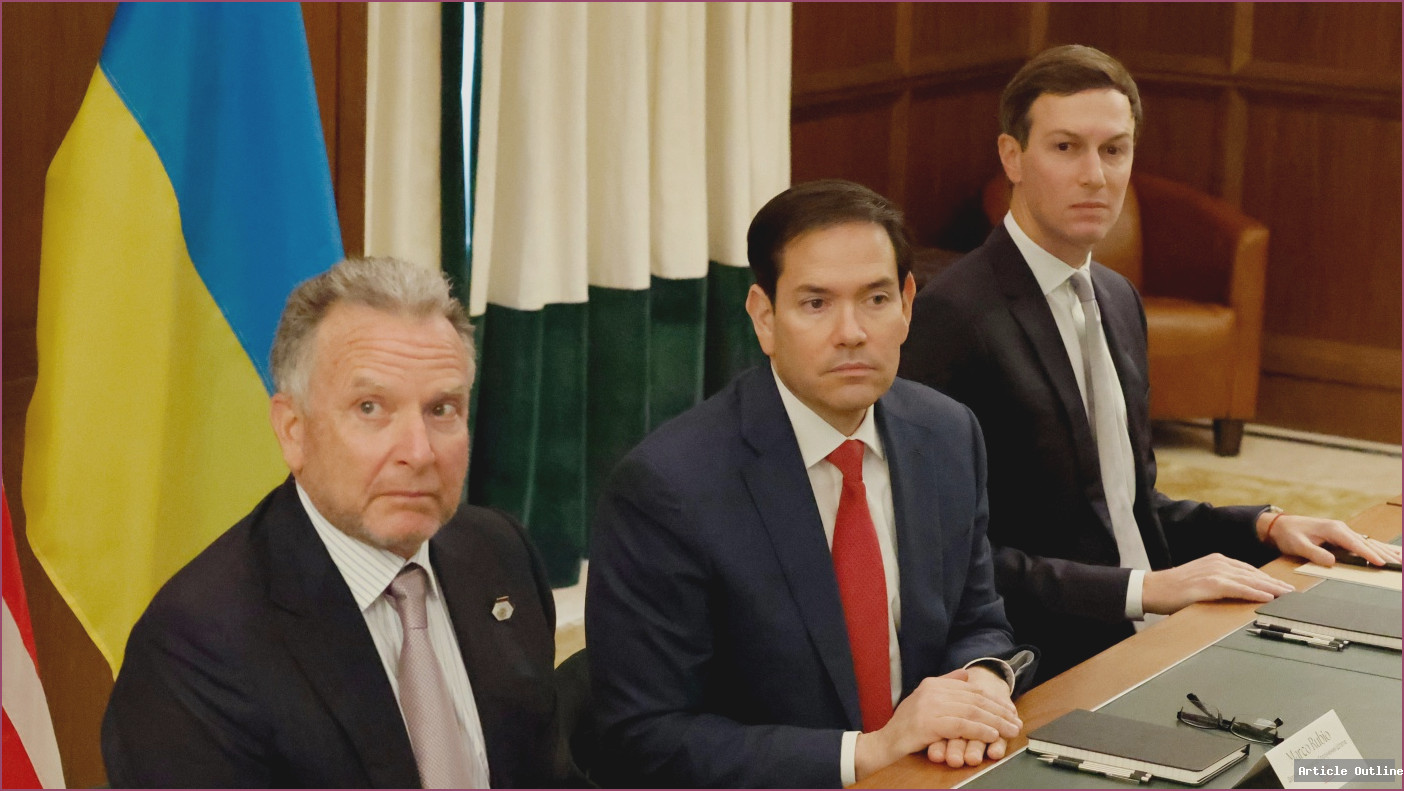
When news broke that US and Ukrainian officials spent four hours locked in negotiation rooms in Florida, it might have sounded like just another round of diplomatic wrangling. But beneath the surface, these talks could determine not only the fate of Ukraine—but also the security architecture of Europe for decades. Let’s peel back the layers, go beyond the headlines, and examine what’s really going on.
Why This Matters
- The outcome of these talks could set a precedent for how international borders are enforced—or violated—by military force in the 21st century.
- Any settlement will ripple across NATO’s credibility, US foreign policy, and the global balance of power.
- With Russia’s invasion grinding into its fourth year, the world is watching to see if Ukraine can secure meaningful sovereignty—or if great power politics will again leave smaller states exposed.
What Most People Miss
- It’s not just about ending the shooting—it’s about what comes next for Ukraine’s independence, economy, and security.
- The proposed US-drafted plan reportedly included painful concessions: limits on Ukraine’s military, no NATO membership, and snap elections—plus initial ideas of ceding the entire Donbas region to Russia. While negotiators say the framework is “evolving,” key details remain secret.
- Russia’s attacks on Ukrainian cities haven’t stopped even as peace talks intensify. In fact, on the very weekend of negotiations, drone and missile strikes killed and wounded dozens, underscoring the brutal reality Ukrainians endure daily.
- The shake-up in Ukraine’s negotiating team—after a high-profile corruption probe—means Kyiv’s domestic politics are shaping the talks as much as battlefield realities.
Key Takeaways
- Diplomacy is moving fast—Trump’s envoy Steve Witkoff heads to Moscow next, possibly with Jared Kushner. Real estate dealmakers are taking center stage in what may be the most consequential peace process since the end of the Cold War.
- Ukraine’s gratitude for US support is being emphasized—likely to keep American assistance flowing, especially as skepticism grows in some US political circles.
- Despite talk of peace, Ukraine faces relentless bombardment: just this week, over 1,400 drones, 1,100 bombs, and 66 missiles rained down, according to President Zelenskyy.
- The war’s spillover effects are real: Ukraine’s strike on a Russian oil terminal drew a sharp rebuke from Kazakhstan, which fears for its own energy exports and bilateral ties.
Timeline: Recent Diplomatic and Battlefield Events
- Prior week: Rubio meets Kyiv’s chief negotiator Andrii Yermak in Geneva—positive signals on revised peace plan.
- Friday: Yermak resigns after corruption probe rocks Zelenskyy’s government.
- Sunday: Four-hour talks in Florida; new Ukrainian team led by Rustem Umerov.
- Coming week: US envoy Witkoff to meet Putin in Moscow.
Pros and Cons of Current Peace Framework
- Pros:
- Potential end to active fighting and civilian deaths.
- Continued US and international support for Ukraine’s reconstruction.
- Possibility to rebuild Ukraine’s economy.
- Cons:
- Possible loss of Ukrainian territory (Donbas).
- Restrictions on Ukraine’s sovereignty (military, NATO membership, forced elections).
- Risk of setting a dangerous precedent for future aggression by powerful neighbors.
What’s Next? Action Steps & Practical Implications
- Watch for announcements from Moscow after Witkoff’s meeting with Putin—the terms could shift quickly.
- Monitor Ukraine’s domestic situation. Political instability could hamper Kyiv’s ability to negotiate from a position of unity and strength.
- Global energy markets will be jittery—any further attacks on oil infrastructure could send prices surging.
- Western governments need to decide: Will they support a deal that limits Ukraine’s sovereignty, or push back against any settlement that rewards aggression?
The Bottom Line
These talks are much more than diplomatic theater—they’re a test of whether international law, alliances, and the post-World War II order still matter. If Ukraine is forced to accept unfavorable terms, every smaller nation will take note. But if a just peace can be hammered out, it could become a blueprint for resolving future conflicts. As always, the devil is in the (still undisclosed) details.
