The Nichols N1A isn’t just another boutique supercar with a retro body. It’s the spiritual successor to the golden era of racing, reimagined with today’s engineering, and it’s got the DNA and credibility to back it up. Conceived by Steve Nichols—legendary designer of the 1988 McLaren-Honda MP4/4, arguably the most dominant Grand Prix car ever—the N1A merges motorsport heritage with contemporary performance in a way few modern cars dare attempt.
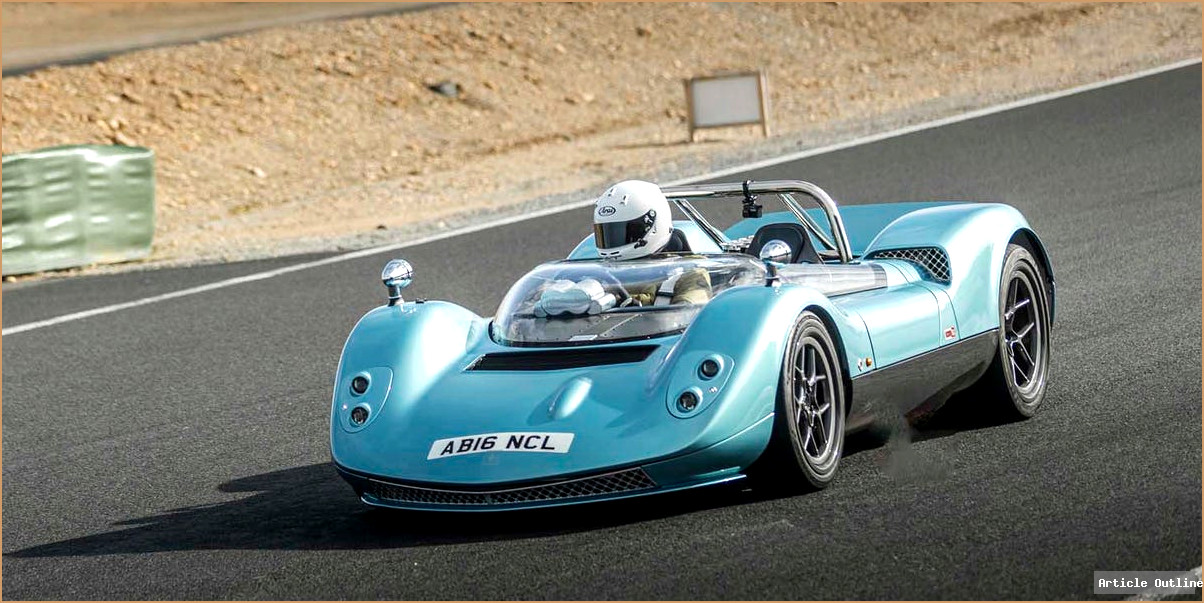
On first glance, the N1A’s curves echo the 1960s Can-Am era, but under that fiberglass or carbon skin lies a machine that could embarrass many tech-laden hypercars. We’re talking a curb weight under 2,000 pounds, a 7.0L Chevy V8 tuned to 730 horsepower, and a focus on raw, analog driving thrills. The Icon 88 edition, limited to just 15 units, pushes the exclusivity dial to eleven, much like the Spinal Tap-inspired button on the dashboard.

Why This Matters
- The N1A is a middle finger to the digital, over-assisted supercar status quo. In a world obsessed with driver aids and autonomous tech, it’s refreshing—and brave—to see a car chase pure, visceral engagement.
- It represents a rare convergence of racing history and road-legal accessibility (in the UK, at least). Most cars with this kind of pedigree are museum pieces or restricted to the track.
- It’s a statement about what wealthy enthusiasts want now: not just bragging rights, but an authentic, analog experience that connects them to motorsport legends like Senna and Lauda.
What Most People Miss
- The racing lineage isn’t just a marketing gimmick. Steve Nichols, the man behind the N1A, engineered multiple championship-winning F1 cars. This isn’t vaporware—it’s the work of someone who knows exactly how a car should feel at the limit.
- The manual shifter is modeled after the very lever Ayrton Senna used in his 1989 Monaco GP win. This is a detail most new supercars would never dare replicate—it’s tactile, historic, and utterly unique.
- While the N1A looks like a 1960s throwback, its chassis features high-tech aluminum bonding and carbon-fiber reinforcements. Underneath, it’s thoroughly modern, but without digital interference between driver and road.
Key Takeaways & Analysis
- Power-to-Weight Supremacy: With 730 hp and less than 2,000 lbs to move, the N1A matches the Bugatti Chiron Super Sport in power-to-weight ratio. That’s hypercar territory in a package that’s much more connected to the driver.
- Limited Edition Icon 88: Only 15 units, each honoring a victory of the MP4/4 in 1988. Expect immediate collector status and sky-high resale potential.
- Raw Driving Experience: No excessive downforce, just enough aero to keep things stable. Unassisted steering is available for purists, while variable power assist is optional for mere mortals.
- Surprisingly Livable: Despite its animalistic performance, the N1A can actually be driven on the road without too much drama. Features like a front-axle lift and customizable interiors add real-world usability.
Industry & Market Context
- Analog Supercars Are Endangered: With electrification and digitalization on the rise, cars like the N1A are vanishingly rare. The Gordon Murray T.50 is a close spiritual cousin, but even it relies on more modern conveniences.
- Price Point & Exclusivity: At $670,000, the N1A sits well below the price of a Bugatti but above most hand-built supercars. For collectors, the heritage and rarity make it a compelling investment.
- Homologation Challenge: The N1A is only street-legal in the UK right now, with U.S. buyers relegated to track use until further notice. This adds a layer of intrigue (and FOMO) for international enthusiasts.
Pros & Cons
- Pros:
- Unmatched driver engagement
- Authentic racing pedigree
- Lightweight, high-power formula
- Ultra-exclusive production
- Cons:
- Limited street legality (for now)
- Pricey, even for a supercar
- Analog focus may intimidate less experienced drivers
The Bottom Line
The Nichols N1A isn’t just an expensive toy—it’s a philosophy on wheels. In an age where computers dull the edge of performance cars, the N1A stands apart as a rolling love letter to motorsport’s rawest era. If you’re lucky enough to get your hands on one, you’re not just buying a car—you’re buying a slice of racing history, engineered by the legends who shaped it.