Pakistan is reeling from what its climate change minister calls the “monster monsoon of the decade”. The images and videos of entire buildings being swept away are harrowing—but beyond the shocking visuals lies a deeper, global story about climate vulnerability, injustice, and what the future may hold for us all.
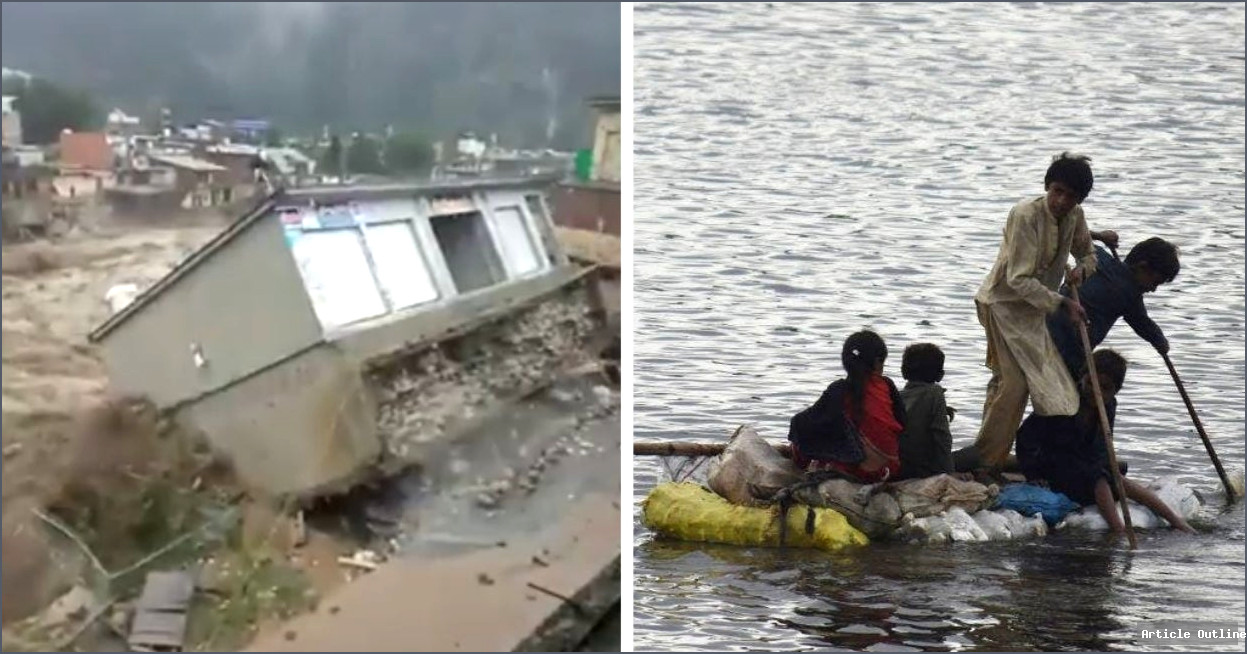
Since June, relentless rains have killed at least 982 people, while millions more have been displaced, especially in hard-hit Sindh province. Schools and mosques now serve as emergency shelters, while a lack of basic supplies like tents exposes the limits of local resources. But this disaster is not just a national emergency; it’s a global wake-up call.
Why This Matters
- Pakistan emits less than 1% of global greenhouse gases, yet is among the most climate-vulnerable nations on Earth.
- With over 7,000 glaciers—the most outside the polar regions—Pakistan faces unique risks from both glacial melt and extreme rainfall.
- This year alone, extreme weather—droughts, floods, heat waves—has battered every continent, from Africa’s deadly droughts to Europe’s “hunger stones” resurfacing as rivers run dry.
This isn’t just about a freak storm. It’s about a global system out of balance and the disproportionate toll it takes on those least responsible for causing the crisis.
What Most People Miss
- The “monster monsoon” is not an isolated event. Pakistan’s 2010 “superflood” affected 20 million people, yet climate adaptation and infrastructure improvements since then have been minimal due to economic and political constraints.
- Flooding isn’t the only threat: glacial lake outbursts—”sudden floods caused by melting glaciers—are accelerating, threatening mountain communities even outside of monsoon season.
- Poor sanitation and stagnant water mean secondary disasters like waterborne diseases are imminent, compounding the humanitarian crisis.
- The global aid system is overstretched, with simultaneous disasters from Texas to Chad. Will the international community step up, or will donor fatigue set in?
Key Takeaways
- Climate change is a risk amplifier: It turns manageable problems into catastrophic ones, especially in vulnerable regions.
- Events in Pakistan are a preview of challenges facing urban centers worldwide—infrastructure built for the past, not the new climate reality.
- Urgent need for adaptation: Disaster relief is necessary, but long-term investment in resilient infrastructure and early warning systems is vital.
- Justice is at stake: Those suffering the most have contributed the least to the problem. This raises serious questions about global responsibility and climate reparations.
Comparisons & Industry Context
- In 2010, Pakistan’s flooding displaced millions; twelve years later, lessons remain unheeded.
- In 2022 alone, the UN reports 4.6 million children in East Africa face severe malnutrition due to climate-driven droughts—climate disasters are not confined by borders.
- Developed nations are also struggling: Dallas, TX saw a year’s worth of rain in a day, while Europe’s rivers reveal ancient artifacts as they dry up. No region is immune.
Action Steps & The Bottom Line
What can be done? Here’s what matters most:
- Invest in climate adaptation now—from flood-proof infrastructure to resilient agriculture.
- Push for global climate agreements that include funding and technology transfer to vulnerable countries.
- Hold polluters accountable—both at the corporate and national level.
- Support credible relief organizations doing frontline work in Pakistan and other crisis zones.
To quote Sherry Rehman, “This is clearly the climate crisis of the decade—through no fault of our own.” The world must listen—not just with sympathy, but with urgent action.