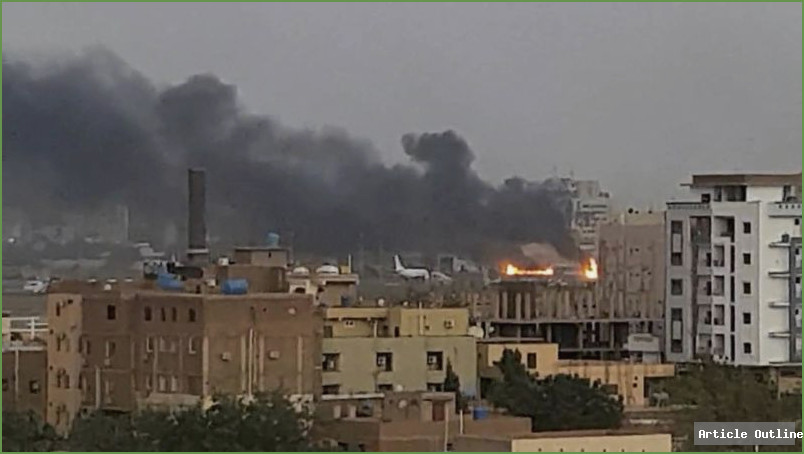
Four years ago, Sudan electrified the world with its grassroots revolution that toppled a 30-year dictatorship. Today, the country teeters on the edge of collapse, its streets filled with gunfire, and 45 million people held hostage by dueling generals. How did a nation’s hope for democracy so quickly unravel? Let’s dig beyond the headlines and uncover what most people miss about Sudan’s tragic turn.
Why This Matters
- Sudan’s experience is a cautionary tale for every society hoping to transition from dictatorship to democracy.
- The fate of Sudan shows that ousting a dictator is just the beginning—real change requires building new institutions, leadership, and trust.
- The collapse threatens not just Sudan, but the stability of the entire East African region, already plagued by conflict and mass displacement.
What Most People Miss
- Sudan’s revolution was leaderless by design—great for resisting tyranny, but disastrous when it came time to negotiate power with the military.
- International peace plans often reinforced the status quo, empowering military elites at the expense of real civilian rule.
- The cycles of violence in Sudan are deeply connected to decades of unresolved ethnic tensions, especially in regions like Darfur.
- Attempts to merge rival armies—like the ill-fated SAF and RSF unification plan—rarely work and often trigger fresh violence, as seen in South Sudan.
Key Takeaways
- The Revolution’s Fatal Flaws: Social movements such as the Sudanese Professionals Association (SPA) were brilliant at mobilizing crowds, but they lacked the hierarchy and negotiation skills to outmaneuver seasoned generals.
- Military Machinations: The transitional government that followed Omar al-Bashir’s fall was a Faustian bargain—generals retained real power while civilians became figureheads.
- Entrenched Violence: The RSF and SAF, both implicated in atrocities, never intended to relinquish control. Their rivalry set the stage for the current bloodshed.
- International Missteps: Well-intentioned but naïve foreign interventions (from the US, UN, and others) failed to understand Sudan’s deep-rooted power struggles.
Timeline: From Revolution to Chaos
- April 2019: Omar al-Bashir overthrown after months of mass protests.
- June 2019: RSF violently disperses sit-in, killing over 100 protesters.
- August 2019: Transitional constitution signed, keeping military in key positions.
- October 2021: Military coup removes civilian Prime Minister Hamdok.
- April 2023: SAF and RSF clash in Khartoum, sparking nationwide violence.
Context: The Numbers Behind the Crisis
- 45 million Sudanese civilians now caught in crossfire
- 180+ civilians killed in recent fighting (and counting)
- 430,000 displaced in Darfur from renewed ethnic conflict since 2019
- 163 killed in a single village-burning incident by RSF-aligned forces
Pros and Cons: International Involvement
- Pros: Brought global attention; offered diplomatic pressure for peace; provided humanitarian aid.
- Cons: Undermined local agency; propped up military actors; repeated failed peace templates from other countries.
Expert Perspective
“A revolution is only the start of change, not the end.”
This insight from Sudan’s former prime minister, Abdalla Hamdok, encapsulates the hard truth. Revolutions are exhilarating, but unless new systems are built—and old powers truly dismantled—history repeats itself.

Practical Implications and Action Steps
- The world must support grassroots Sudanese civil society, not just power brokers.
- Peace plans must prioritize justice and inclusion, or risk fueling new cycles of violence.
- Sudan’s story reminds us: democracy is a process, not an event. Ousting a dictator is just the beginning.
The Bottom Line
Sudan’s unfinished revolution reveals the perils of half-measures and the deep scars left by decades of tyranny. Real democracy can’t be imposed from above or rushed through backdoor deals—it must be painstakingly built from the ground up. For now, the Sudanese people are caught in the crossfire, their dreams deferred but not defeated.