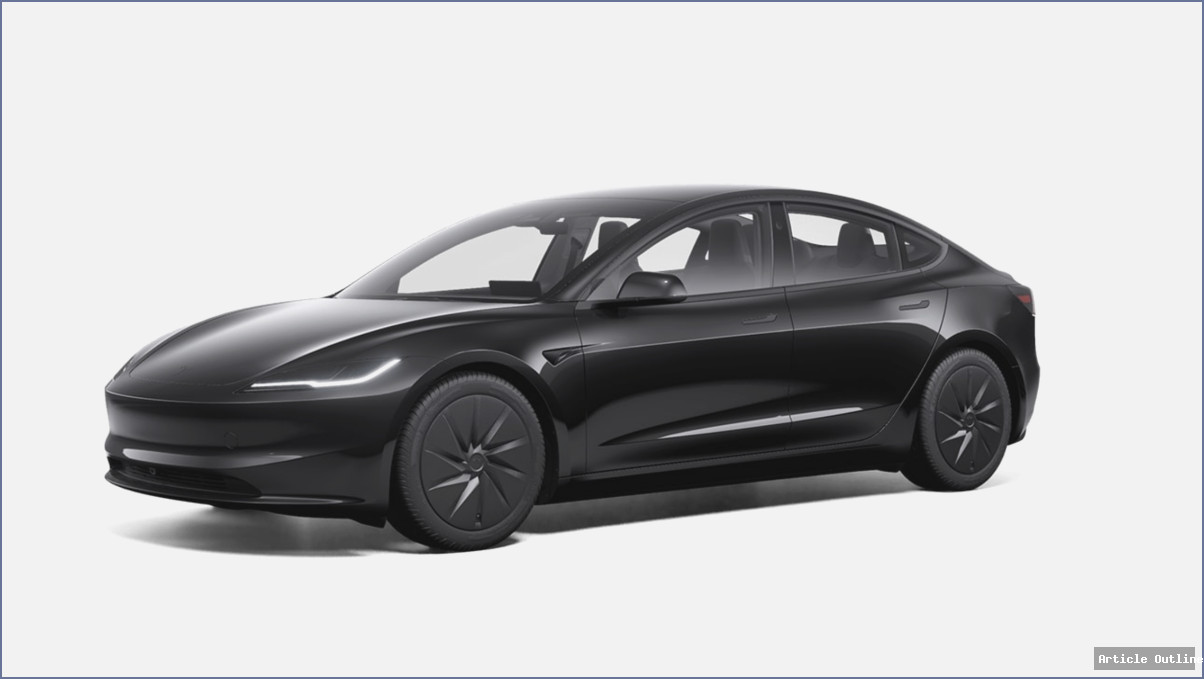
Tesla has just unleashed its most affordable Model 3 yet in Europe—a move that’s as much about survival as it is about sales. With the electric vehicle (EV) market in Europe growing more crowded and competitive, this stripped-down Model 3 arrives at a pivotal moment for the American automaker. But is a lower price tag enough to counter sliding sales and mounting competition? Let’s dive deeper.
Why This Matters
- Tesla’s European sales have been plummeting—a staggering 58% drop in France and 49% in Denmark last month alone.
- Chinese EV makers (especially BYD) are eating Tesla’s lunch with rapid growth in market share and fierce price competition.
- The new Model 3 Standard is about €8,000 cheaper than the next trim, making it accessible to a wider swathe of buyers.
It’s a high-stakes play. Europe is one of the world’s most aggressive regions for EV adoption—and whoever wins here shapes the future of the industry.

What Most People Miss
- Tesla is sacrificing features for affordability: The Standard Model 3 loses range, speed, rear displays, heated seats, and color options—trading luxury for price.
- The ‘Standard’ keeps some surprising perks in Europe: Unlike the US, European buyers still get Basic Autopilot with Autosteer and the Panoramic Glass Roof.
- Tesla’s brand perception is now a wild card: Consumer Reports just ranked Tesla 10th (a jump from 18th), but Germany’s TÜV called some models among the least reliable ever tested. The brand’s reputation is a swinging pendulum.
Key Takeaways
- Price Drop Breakdown: Model 3 Standard starts at €37,970 in Germany and €36,990 in France/Italy—a significant discount.
- Feature Cuts: Fewer colors, cloth seats, simpler interior, and no rear heated seats or extra displays. If you want bells and whistles, you’ll pay.
- Market Timing: Arrives as Tesla’s CEO Elon Musk’s politics and aggressive Chinese competition (BYD up 272% in Europe!) hammer sales.
- Mixed Signals: Improved in some quality rankings (Consumer Reports), yet dogged by reliability concerns in Europe (TÜV).
Industry Context: How Does Tesla Stack Up?
- BYD and other Chinese rivals are undercutting prices and offering well-equipped EVs, pressuring Tesla’s margins.
- European automakers (VW, Renault) are doubling down on affordable EVs with government incentives—Tesla can no longer count on being the only game in town.
- Growing consumer scrutiny on real-world reliability and after-sales service—areas where Tesla faces mixed reviews.
Timeline: Tesla’s European Sales Rollercoaster
- 2022: Tesla dominates premium EV market in Europe.
- 2023: BYD and Chinese EVs surge, gaining market share.
- Late 2024: Tesla’s sales in key countries start to nosedive.
- December 2025: Launch of the Model 3 Standard—Tesla’s bid for a comeback.
Pros & Cons of the Cheaper Model 3
- Pros:
- Lower price opens up Tesla ownership to more buyers.
- Retains core Tesla features (Autopilot, glass roof) in Europe.
- Potentially eligible for local EV incentives.
- Cons:
- Notably fewer features—may feel less premium.
- Reduced range and performance.
- Reliability questions linger in the EU market.
The Bottom Line
The new, stripped-down Model 3 is Tesla’s attempt to regain momentum in a brutally competitive European EV market. Will it work? If price is all that matters, maybe. But as rivals improve and buyers get savvier, Tesla will need more than just discounts—it will need to prove its cars are reliable, desirable, and a cut above.
“Tesla’s future in Europe hinges on more than affordability—it depends on trust, quality, and innovation.”