The electric vehicle (EV) industry has hit a fascinating crossroads—one where explosive innovation, market turbulence, and public skepticism all collide. A recent WIRED livestream promises to tackle the hype versus reality of EVs, but let’s go deeper and dissect what’s truly at stake for consumers, automakers, and the planet.
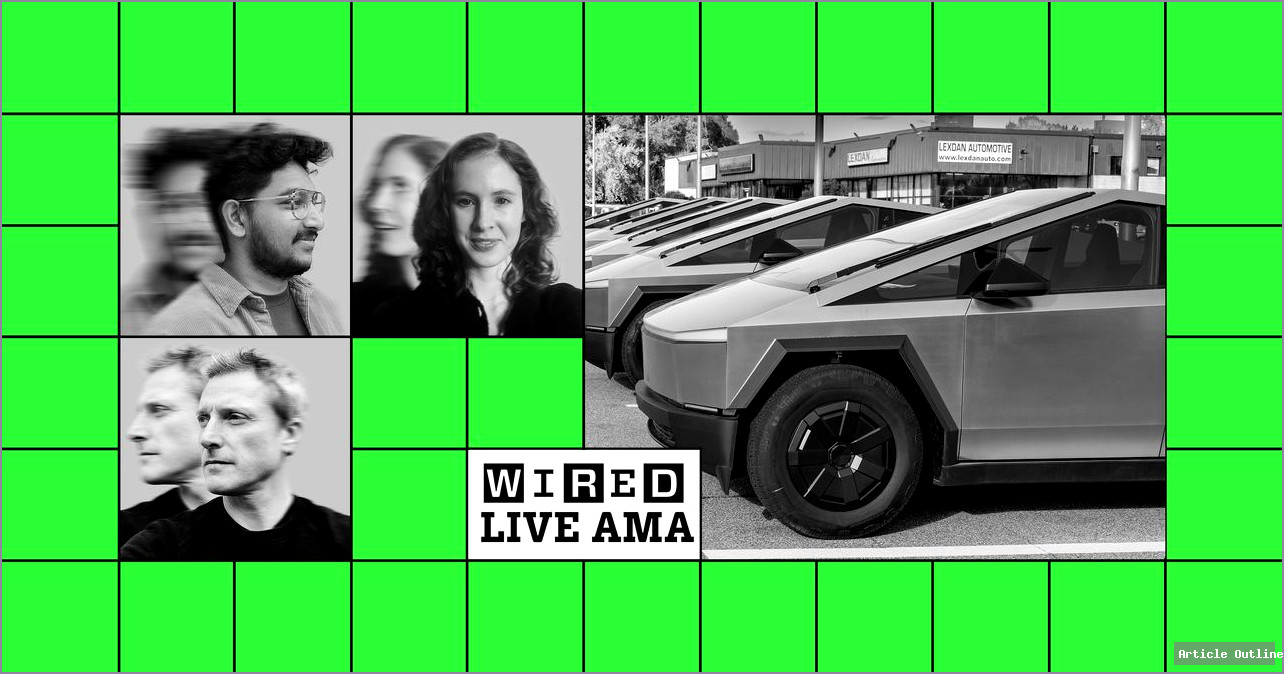
EVs aren’t just a tech trend—they’re reshaping the global automotive landscape, with new winners and surprising setbacks. But beneath the headlines, critical questions remain: What’s fueling the EV slowdowns? Will Tesla ever reclaim its crown? Are we charging toward a greener future or just idling at the next roadblock?
Why This Matters
- The global auto industry is undergoing its biggest transformation in a century. Who wins and loses will ripple across economies, jobs, and the environment.
- China’s BYD overtaking Tesla as the world’s largest EV maker signals a shift in technological dominance and manufacturing prowess away from the US and Europe.
- EV adoption ties directly to climate policy goals. If the US and other nations miss electrification targets, the fight against climate change stalls.
What Most People Miss
- It’s not just about the cars—it’s about the charging infrastructure. Range anxiety is real. The US has around 160,000 public chargers, but analysts say we’ll need at least 2 million by 2030 to keep up with demand.
- EV growth isn’t uniform. Europe and China are surging ahead; US adoption is patchy, heavily favoring coastal cities. Rural and low-income drivers are often left behind.
- Automakers are hedging bets. Ford recently scaled back its F-150 Lightning production in favor of hybrids, hinting that consumer demand may not be as robust—or as predictable—as Wall Street hoped.
Key Takeaways
- Market Disruption: Legacy automakers are racing to electrify, but many face supply chain woes and uncertain consumer demand.
- Policy is Pivotal: Government incentives, emissions regulations, and infrastructure investments will determine which nations—and brands—lead the pack.
- Tech vs. Reality: The latest EVs boast 300+ mile ranges and wild acceleration, but sticker shock and charging access still deter mainstream buyers.
- Don’t Count Out Hybrids: With pure EV sales growth slowing, hybrids and plug-in hybrids are making a surprising comeback.
EVs in Context: A Quick Timeline
- 2012–2017: Tesla dominates, EVs are niche luxury products.
- 2018–2021: Global surge; China, Europe lead mass adoption. US incentives boost domestic interest.
- 2022–2024: Record EV launches; BYD surpasses Tesla. Charging infrastructure and supply chain become bottlenecks.
- 2025+: All eyes on infrastructure, affordability, and policy shifts.
Expert Commentary
“The real race isn’t about who sells the most EVs—it’s about who can make electric driving as convenient and affordable as gas.”
— Jeremy White, WIRED Senior Writer
The Bottom Line
The EV revolution is inevitable, but the road there is full of twists. Infrastructure, policy, and consumer habits will shape the winners—and the timeline. For buyers, it’s a golden era of choice, but also of confusion. For automakers, it’s innovate or get left behind. And for society? Every charge, every new model, and every policy tweak brings us closer to—or farther from—a sustainable future.