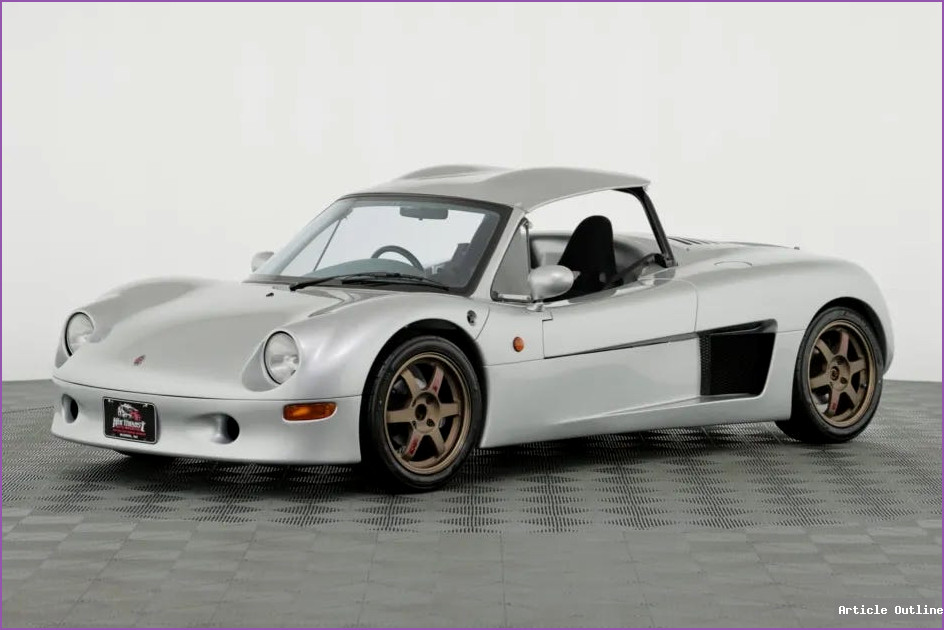
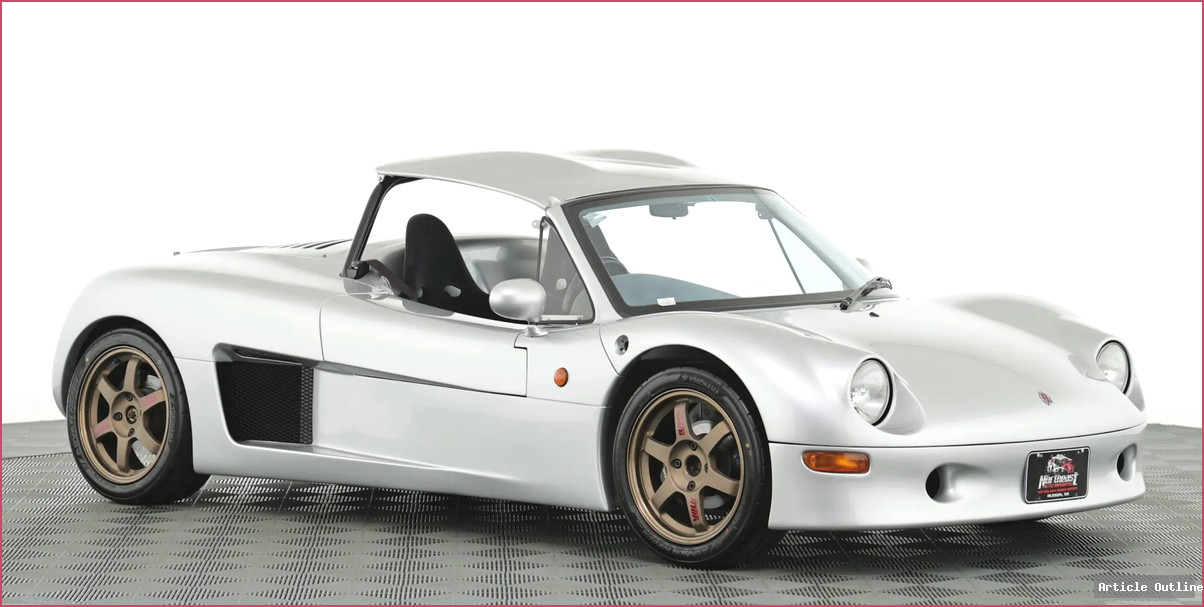
For decades, U.S. car enthusiasts have gazed longingly at Japan’s rarest and quirkiest cars, only to be blocked by import rules. But 2026 is a landmark year for one of the most elusive and adrenaline-charged JDM machines: the Tommykaira ZZ. If you remember blasting around digital circuits in Gran Turismo, you already know this car’s iconic, frog-faced silhouette. Now, for the first time, America’s garages can finally welcome this featherweight legend.
Why This Matters
- The Tommykaira ZZ is a unicorn even in Japan—with only 220 built, it’s the definition of exclusive.
- It represents a lost philosophy of sports car design: ultra-lightweight, unfiltered, and raw—think Lotus Elise, but even lighter (just over 1,400 lbs!).
- The 25-year DOT rule is unlocking an era of obscure, enthusiast-focused vehicles that were never designed for American roads. The ZZ is the perfect poster child for this new wave.
What Most People Miss
- The power-to-weight ratio is bonkers: With up to 197 hp in a chassis lighter than an Elise, the ZZ matches the legendary Skyline GT-R’s power-to-weight punch—but with an open-air, analog driving experience.
- Built in the UK, powered by Nissan, inspired by the best of Europe: Forget stereotypes about JDM cars—this is a true global mash-up, blending Japanese engineering with British sports car DNA and a dash of French quirkiness (lighter than the Renault Sport Spider by 700 lbs!).
- It’s a conversation piece as much as a car: Even among JDM aficionados, few have seen one in the wild. Its cult status from Gran Turismo makes it a generational icon for gamers and gearheads alike.
- Second-generation ZZ is electric, but you’ll have to wait until 2039 to import that one. The OG is the pure, analog hero.
Key Takeaways
- Exclusivity: Only 220 made—rarer than most Ferraris and Porsches.
- Performance: Nissan SR20 2.0L, up to 197 hp, quad carbs, mid-engined, just over 1,400 lbs. That’s supercar territory for power-to-weight.
- Compromises: Forget modern comforts. Weather protection is laughable, and spare parts (especially bodywork) are almost mythical.
- Collector Value: Its scarcity and digital-age fame guarantee rising values and instant conversation at any cars and coffee.
How the ZZ Compares: A Quick Context Check
- Lotus Elise (Series 1): ~1,600 lbs, 118-190 hp. ZZ is lighter and, in some trims, more powerful.
- Renault Sport Spider: ~2,100 lbs, 148 hp. ZZ is 700 lbs lighter and has up to 49 more ponies.
- Mazda Miata (NA): ~2,100 lbs, 116 hp. ZZ is in a different universe for weight and power.
Timeline: From Tuner to Legend
- Late 1980s: Tommykaira founded by Yoshikazu Tomita (importer) & Kikuo Kaira (engineer/racer).
- Early 1990s: Company gains fame tuning Skylines, Imprezas, and Silvias.
- Mid-1990s: Tommykaira ZZ launched, built in UK, powered by Nissan, enters Japanese market.
- 1999: ZZ debuts in Gran Turismo 2, instantly becomes a digital cult car.
- 2026: U.S. import eligibility achieved under the 25-year rule.
Pros and Cons
- Pros:
- Unparalleled driving purity & connection
- Unique design—guaranteed head-turner
- Collector-grade rarity
- Motorsport pedigree
- Cons:
- Zero weather protection
- Spares are nearly impossible to find
- Not for the faint of heart (or the tall!)
The Bottom Line: Why the Tommykaira ZZ Is Worth the Hype
If you crave the purest, rarest, most analog JDM driving experience, the Tommykaira ZZ is your holy grail. It’s not just about speed, but about feel—the kind of car that makes every drive an event. Sure, you’ll get wet, and you might have to 3D-print your own parts, but you’ll own a piece of automotive folklore that bridges the digital and the real world. If you want the ultimate conversation starter—and a driving experience like no other—the time to import is now.
Sources:
- Source
- Tommykaira ZZ: More Than a Gran Turismo Hero – Road & Track
- Tommykaira in Gran Turismo – Fandom Wiki