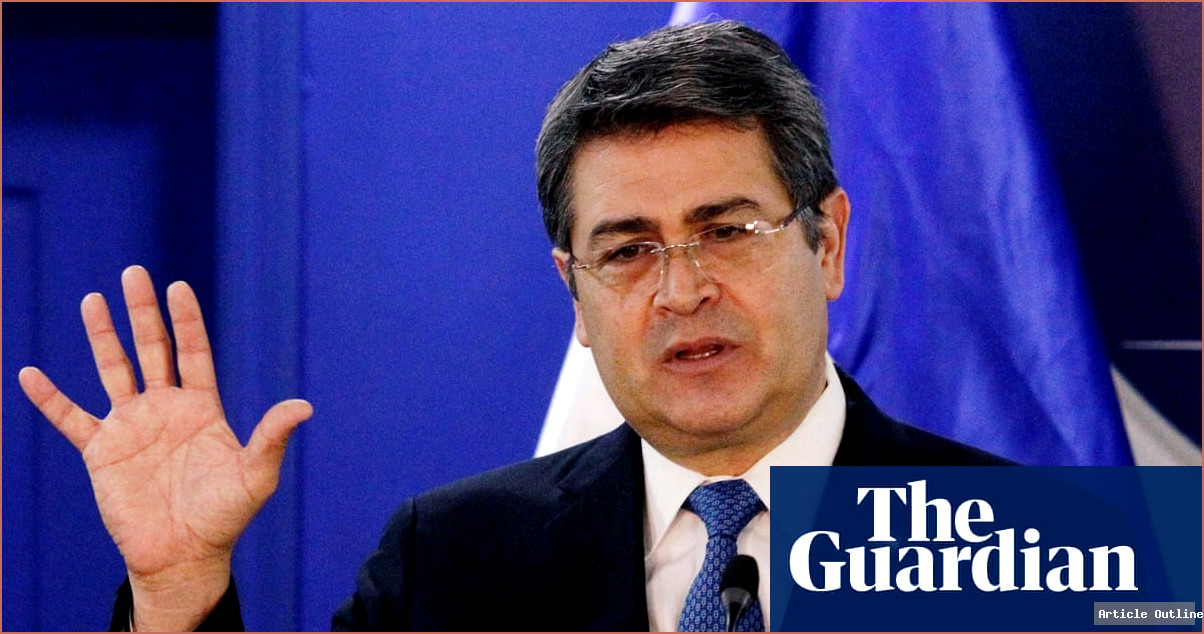
In a move that has shaken both hemispheres, Donald Trump pardoned former Honduran president—and convicted drug trafficker—Juan Orlando Hernández, releasing him from a U.S. prison just as Honduras faces a razor-thin election. This isn’t just another headline in the saga of U.S.-Central American relations; it’s a plot twist loaded with global stakes, hypocrisy, and a warning for anyone who believes democracy is safe from foreign fingerprints.
Let’s break down why this moment matters, what most media coverage is missing, and what it signals for the future of international politics and anti-drug crusades.

Why This Matters
- Double standards in the global ‘war on drugs’: Trump’s pardon comes as he touts a crackdown on traffickers, even launching military strikes in the Caribbean. Yet, he lets loose someone whose administration was described as a “cocaine superhighway” to the U.S.
- Election interference on steroids: Trump’s overt support for Nasry Asfura—Hernández’s ally—comes with public threats and U.S. aid hanging in the balance, right as the election hangs on a mere 515 votes.
- Precedent-setting U.S. intervention: This isn’t isolated. Similar moves in Argentina, where Trump leveraged a $40bn bailout on election outcomes, suggest a new era of hardball U.S. leverage in Latin American democracies.
What Most People Miss
- The hidden cost of U.S. ‘support’: When Washington makes aid conditional on specific candidates, it undermines local legitimacy and breeds lasting distrust—even when those candidates win.
- Political instability is the real export: Honduras’ vote count blackout echoes its traumatic 2017 election, where sudden ‘technical problems’ and U.S. recognition of the controversial winner sparked deadly protests. History may be repeating itself.
- Drug trafficking isn’t just a local problem: U.S. demand for cocaine drives the trade, and American politics often ignores its own complicity when blaming or scapegoating foreign leaders.
Key Takeaways
- U.S. foreign policy is increasingly transactional—and it’s not subtle. Conditional support, pardons, and public ultimatums are becoming standard playbooks.
- Democratic legitimacy is fragile. When external powers weigh in so heavily, losing sides (and even winners) face doubts that can paralyze governance.
- Anti-drug rhetoric often masks deeper interests. Pardoning a convicted trafficker while bombing others exposes the selective morality of policy decisions.
Context: What’s Happening in Honduras?
- The vote is incredibly close: Asfura leads by just 0.02% over Nasralla, with technical issues stalling the count.
- All major candidates are alleging fraud, and the electoral council has up to 30 days to announce the result.
- The memory of 2017’s violent protests over contested results looms large, raising the stakes for every move now.
Timeline: Recent Key Events
- 2019: Hernández’s brother convicted of drug trafficking.
- 2021: Hernández’s party suffers a historic defeat.
- October 2025: Hernández appeals to Trump; claims political targeting.
- December 1, 2025: Hernández released from U.S. prison by Trump’s pardon.
- December 2, 2025: Honduran vote count suspended amid chaos.
Pros and Cons: U.S. Intervention in Foreign Elections
- Pros: Can stabilize regions, protect U.S. interests, and curb extremism (in theory).
- Cons: Undermines local trust, can backfire spectacularly, and often leads to long-term instability.
Expert Commentary
“Those messages from Trump validated a political party that was practically unable to win because of its long history of links to drug trafficking and corruption.”
— Gustavo Irías, Honduran democracy expert
Irías’ warning is clear: When global power steps in to tip the scales, democracy gets more fragile—and the people pay the price.
The Bottom Line
This is more than a pardon and a close election—it’s a case study in how powerful nations can shape, warp, or even break democracies in their backyard. The world should watch Honduras closely. Today, it’s about drugs and votes; tomorrow, it could be about any nation where power and principle collide.
