President Donald Trump’s latest national security strategy marks an audacious—some would say jarring—departure from the post-Cold War consensus. The document doesn’t just double down on ‘America First’; it redraws the map of U.S. priorities, openly criticizing European allies, reasserting U.S. muscle in the Western Hemisphere, and calling for a major reset on relations with both the Middle East and China.
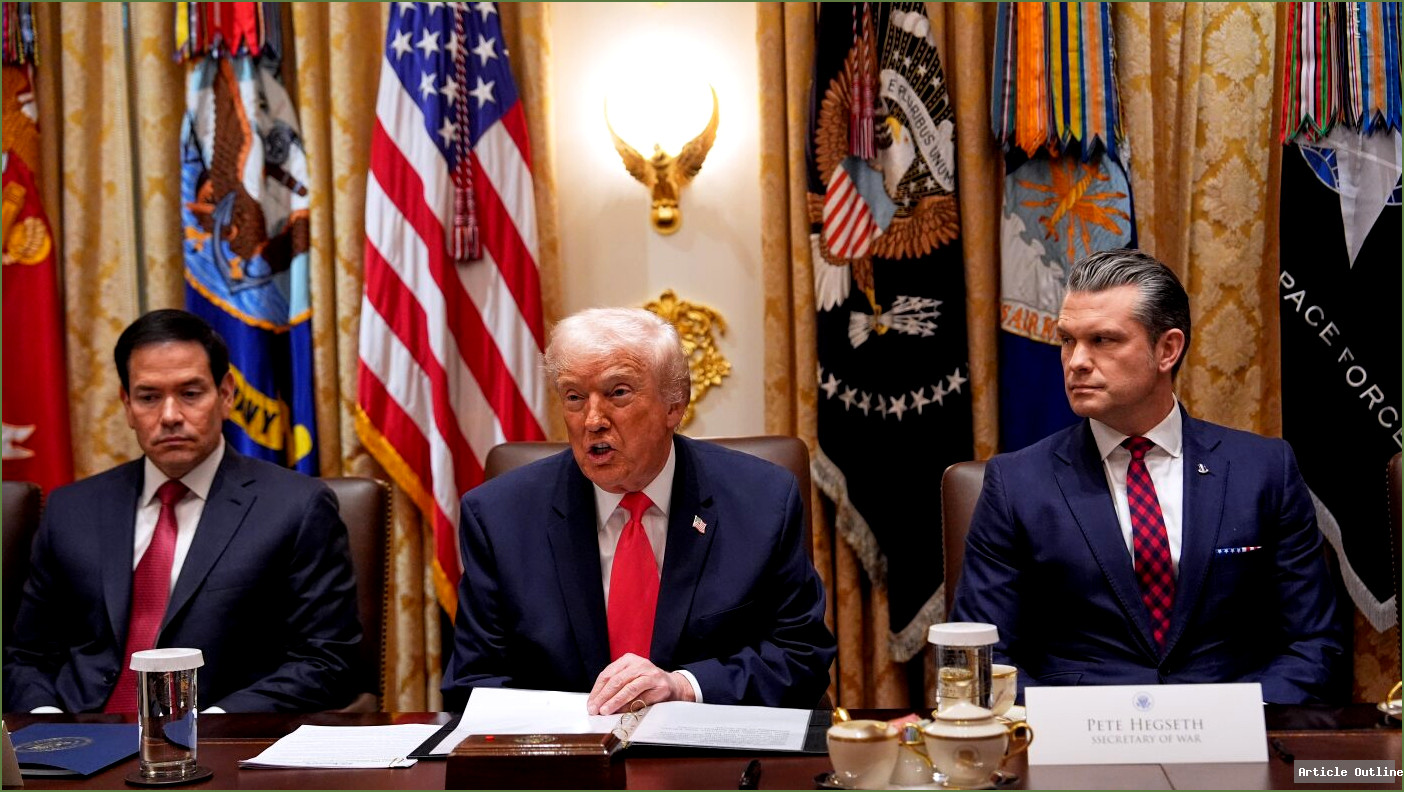
Let’s dive into why this pivot matters, what the mainstream coverage isn’t telling you, and how this strategy could reshape global power dynamics for years to come.

Why This Matters
- A Reversal of Decades-Old Alliances: Trump’s document signals open skepticism about NATO and long-time European partners, raising doubts about their future reliability. This isn’t just tough talk; it could undermine the foundation of Western security since World War II.
- A Monroe Doctrine 2.0: By referencing a ‘Trump Corollary’ to the Monroe Doctrine, the U.S. is explicitly laying claim to a dominant role in the Americas—a stance with echoes of 19th and 20th-century interventions, but updated for the age of drug cartels and migration crises.
- Strategic Rebalancing: The U.S. seeks to shift away from ‘nation-building’ in the Middle East, refocusing on partnerships and economic opportunities while de-emphasizing democracy promotion. Simultaneously, the strategy aims to counter China’s rise by demanding more from Asian allies.
What Most People Miss
- The ‘Civilizational Erasure’ Framing: The language about Europe’s ‘prospect of civilizational erasure’ is more than a jab—it reflects a growing ideological divide over migration, identity, and the future of liberal democracy. This could embolden far-right movements across Europe.
- Selective Sovereignty: While advocating non-intervention in the Middle East, the U.S. reserves the right to use ‘lethal force’ in Latin America and to pressure regional governments. This selective approach may breed resentment and accusations of hypocrisy.
- Economic Underpinnings: By focusing on economic stagnation in Europe and touting economic partnerships in the Middle East, Trump’s strategy treats security and economic policy as inseparable—an approach that could redefine alliances based primarily on transactional interests.
Key Takeaways
- The U.S. is openly questioning the viability of some European allies, pushing them to increase military and economic self-reliance.
- America’s new ‘hemispheric’ focus could result in increased military action and political intervention in Latin America.
- The administration’s approach to China is less about decoupling and more about demanding Asian allies share the security burden—potentially straining U.S.-Asia relations.
- By downplaying democracy promotion in the Middle East, the U.S. risks ceding moral leadership but could gain more stable partnerships (at least in the short term).
Timeline: How Did We Get Here?
- 2016-2020: Trump’s first term sees the U.S. questioning NATO, pulling out of multilateral agreements, and imposing tariffs on China.
- 2021-2024: Biden’s administration attempts to rebuild alliances and push back against Russia’s aggression in Ukraine.
- 2025: Trump’s return to office and the release of a new national security strategy that codifies his vision of a reordered world.
Pros and Cons Analysis
- Pros:
- Clarity of Purpose: U.S. interests are clearly defined, reducing ambiguity for both partners and rivals.
- Potential for Stronger Borders: Focused action in the Americas could disrupt drug trafficking and illegal migration.
- Economic Opportunities: Deeper ties with the Middle East and transactional relationships may yield short-term economic gains.
- Cons:
- Alliance Fatigue: Open criticism of allies could weaken NATO and embolden adversaries like Russia and China.
- Risk of Overreach: Military escalation in the Americas or confrontation with China could spiral out of control.
- Loss of Moral Authority: Downplaying democracy and human rights may damage America’s global reputation.
Expert Commentary
“The world will be a more dangerous place and Americans will be less safe if this plan moves forward.” — Rep. Jason Crow, Member of House Intelligence and Armed Services Committees
On the other hand, supporters within the U.S. and far-right European parties see this as a long-overdue reality check for the Western world.
The Bottom Line
Trump’s strategy isn’t just policy—it’s a declaration of a new order, one that could upend decades of U.S. foreign relations. The question is whether this bold approach will lead to greater security and prosperity—or unintended isolation and instability. Allies, adversaries, and ordinary citizens alike would be wise to pay attention.