When it comes to electric vehicles, excess has a new name: the Cadillac Escalade IQL. Weighing in at a jaw-dropping 9,000 pounds, stretching nearly 19 feet long, and boasting a price tag north of $130,000, this behemoth isn’t just a car—it’s a rolling statement. But what does it actually mean for the future of EVs, luxury SUVs, and our driving psyche? Let’s dig into why this monster matters, what most people are missing, and what it says about where automotive culture is headed.
Why This Matters
- The Escalade IQL is a symbol of the electrification of American excess. For decades, the Escalade has represented “making it.” Now, Cadillac is betting big that even the ultra-luxury crowd is ready to go electric—without sacrificing an ounce of size, power, or ego.
- It challenges the notion that EVs must be eco-minimalist. With a battery the size of a small city grid (205 kWh), this SUV is unapologetic about its energy consumption. This is not your neighbor’s compact commuter EV.
- The user experience is redefining “digital maximalism” inside a vehicle. From the 55-inch 8K dashboard to the individualized entertainment and massage seats, Cadillac is throwing down the gauntlet for what luxury means in the EV era.
What Most People Miss
- Driving dynamics defy expectations. Despite its size, drivers are shocked at how nimble the Escalade IQL feels. It’s not a sports car, but it doesn’t lumber like a traditional full-size SUV.
- The infrastructure gap is massive. While the car is luxurious, public charging is still a pain—especially for non-Tesla EVs in remote or wintery regions. Plan poorly, and you’ll be hunting for kilowatts at midnight in a blizzard.
- EV luxury comes with new quirks. The frunk (front trunk) is a lesson in patience, the software lags behind Tesla’s intuitive systems, and the tire pressure needs are mind-bogglingly high due to sheer weight.
Key Takeaways
- Luxury buyers want it all—space, tech, power, and now, (somewhat) sustainability. The Escalade IQL delivers on every front, even if it’s a stretch to call it “green.”
- Real-world range is highly variable. GM claims 460 miles, but winter, mountain driving, and heavy loads eat into that figure fast. Expect 45kWh/100mi consumption—nearly double some rivals.
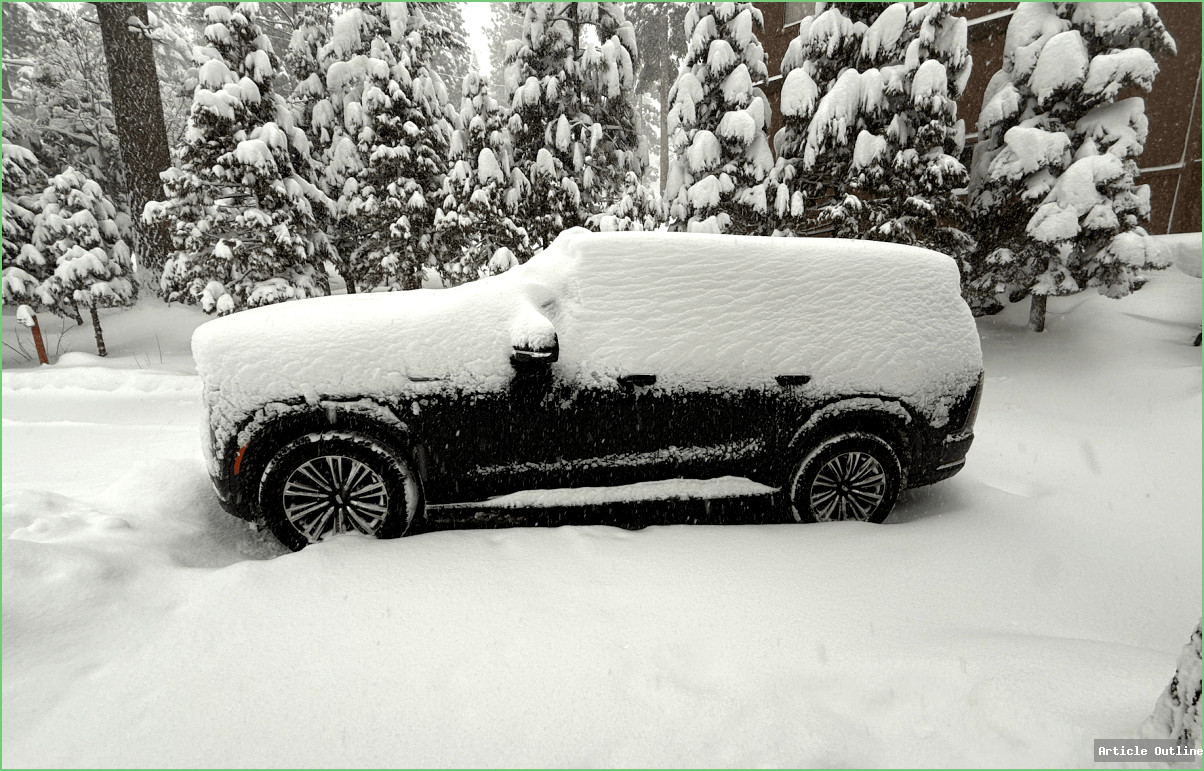
- The emotional connection is real. Drivers may start off embarrassed by its size, but in tough conditions—like facing eight feet of snow—they end up loving it. It’s the SUV you don’t want to admit you want.
Industry Context & Comparisons
- The Escalade IQL’s 205 kWh battery dwarfs the Tesla Model X’s (~100 kWh) and even rivals electric pickup trucks like the Rivian R1T.
- At 9,000 pounds, it’s heavier than the GMC Hummer EV and nearly three times the weight of a standard sedan.
- Its hands-free Super Cruise system is a direct answer to Tesla’s Autopilot, though user experience still lags in polish and reliability.
- Charging challenges echo what early EV adopters have long complained about: infrastructure is a patchwork, especially outside major urban centers.
Pros and Cons at a Glance
- Pros:
- Unmatched interior luxury and tech
- Unexpectedly easy to drive for its size
- Handles severe weather with ease
- Ultimate road trip comfort for large families
- Cons:
- Massive size makes parking and city driving stressful
- Charging can be a nightmare in less urban areas
- Software and frunk usability need work
- Range falls quickly in adverse conditions
Timeline: The Journey from Doubt to Desire
- Initial Skepticism: Overwhelmed by size, worried about practicality.
- Digital Awe: Blown away by the screens, sound, and comfort.
- Infrastructure Reality: Frustrated by charging and small software annoyances.
- Weather Redemption: 8 feet of snow proves the Escalade’s worth and wins hearts.
- Reluctant Goodbye: After living with it, the idea of returning the SUV feels like losing an old friend (or a secret indulgence).
The Bottom Line
The 2026 Escalade IQL is the ultimate paradox: an EV that’s everything environmentalists love to hate, yet a technological marvel that redefines what luxury means on four wheels. It’s not for the faint of heart, the budget conscious, or the urban minimalist. But in an age where SUVs reign supreme (SUVs accounted for over 46% of U.S. vehicle sales in 2023), it’s a bold statement about what electrification can look like at the top end—and how emotions, not just specs, drive our automotive obsessions.

Sources: