The 2025 Mustang RTR Spec 3 storms onto the scene with a headline-grabbing 810 horsepower and a price tag north of $100,000. But here’s the twist: More power doesn’t always mean more performance—especially when engineering and execution don’t keep pace with ambition. Let’s dig into why this Mustang, despite its muscle and menacing looks, may not be the ultimate pony car you expect.
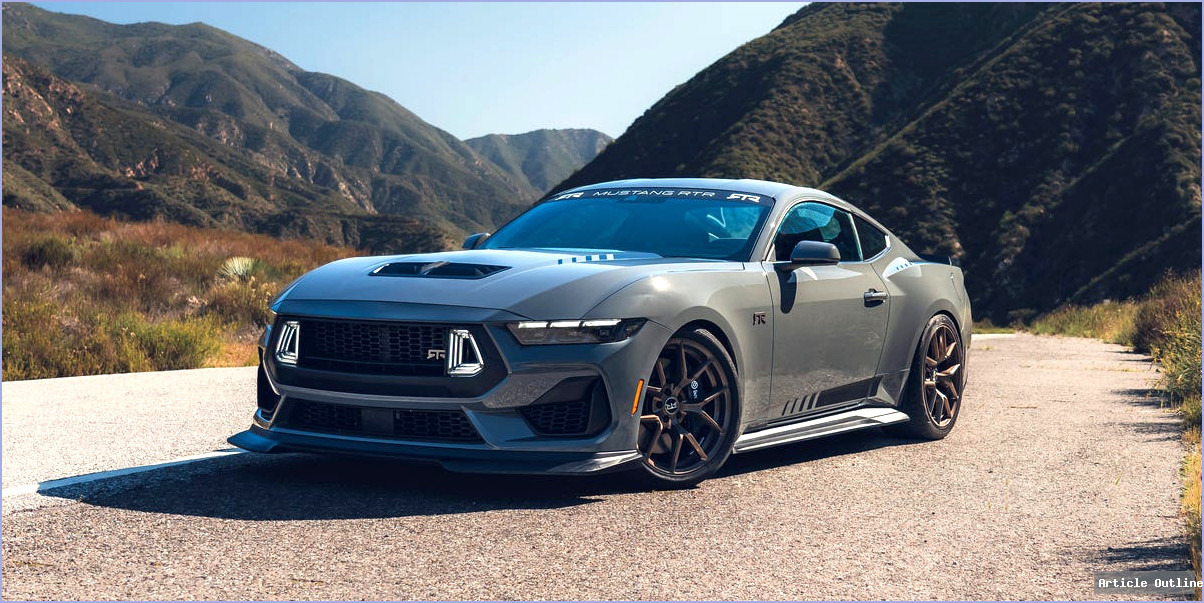
When you hear names like Shelby, Roush, and Saleen, you think Mustang greatness. RTR, the brainchild of drift champion Vaughn Gittin Jr., wants a slice of that legacy with its Spec 3—a supercharged, visually striking take on the latest Mustang GT. On paper, it’s a monster: 810 hp, 615 lb-ft of torque, and a host of aggressive cosmetic upgrades. But as any enthusiast knows, numbers are only half the story.

Why This Matters
- The RTR Spec 3 is a cautionary tale about the limits of bolt-on performance without holistic engineering. It exposes a crucial point: building a great car is about more than stacking parts and chasing dyno glory.
- With ever-rising prices for performance cars, buyers are demanding true value—not just in horsepower, but in usable, balanced performance on the road and track.
- The Spec 3’s struggles highlight a broader industry trend: the escalating arms race among tuners and OEMs, and the potential pitfalls of prioritizing headline figures over real-world capability.
What Most People Miss
- Despite all that power, the Spec 3 is slower than a stock Mustang GT manual—both to 60 mph (4.7s vs. 4.2s) and through the quarter-mile (12.7s @ 121 mph vs. 12.5s @ 114 mph). That’s not just surprising; it’s a little embarrassing for a car costing nearly double.
- The root causes? An unupgraded clutch and tires that are better for smoky slides than for launching cleanly. The car can’t put its power down efficiently, turning dramatic horsepower into tire smoke instead of lap times.
- RTR’s hands are tied by their desire to retain a factory-matching warranty—meaning they can’t upgrade the clutch beyond Ford Performance’s catalog. That’s a real-world compromise few buyers consider.
Key Takeaways
- Looks and sound are only part of the equation. The Spec 3 has curb appeal and presence, but its track and performance numbers lag behind cheaper, less powerful models.
- Upgrades like the Tactical Performance suspension and wild body kit add style and some handling flair, but can’t overcome basic mechanical bottlenecks.
- With an as-tested price of $109,808, the Spec 3 is more about exclusivity, warranty, and street presence than outright performance.
- For the same (or less) money, a skilled mechanic could build a faster, more balanced Mustang—just without the warranty and signature badges.
Pros & Cons Analysis
- Pros:
- Unique styling and street presence
- Warranty coverage on all upgrades
- Massive power for bragging rights
- Adjustable suspension for ride/handling tweaks
- Cons:
- Slower than a stock Mustang GT on track
- Unchanged clutch and street tires can’t handle the power
- High price for modest real-world gains
- Compromised usability and value
Timeline: RTR’s Evolution
- RTR Vehicles founded by Vaughn Gittin Jr., focusing on drift and street Mustangs.
- RTR Spec 1 and Spec 2: Focus on cosmetic and mild performance upgrades.
- Spec 3 debuts: Major jump in power via supercharger, with warranty support.
- Spec 5 pushes output even further (870+ hp), but at even greater cost and complexity.
The Bottom Line
The 2025 Mustang RTR Spec 3 is a showstopper—just not at the drag strip. It’s proof that the muscle car world’s obsession with big numbers can sometimes backfire. For buyers who crave attention, exclusivity, and a warranty to back up their investment, it’s a compelling (if expensive) proposition. But for those who want a sharper tool for the track or the street, the stock GT—or a thoughtfully modded alternative—might be the smarter choice.
“Looks like a champion but won’t finish first.” — Verdict from Car and Driver