The 2027 Ram 1500 Rumble Bee SRT is more than just a nostalgic nod to muscle trucks of the past—it’s a bold statement about where American performance vehicles are heading. In a world tilting rapidly toward electrification, Ram’s decision to unleash a trio of V-8-powered street trucks, including a 777-hp Hellcat monster, is as much an act of rebellion as it is a business strategy.
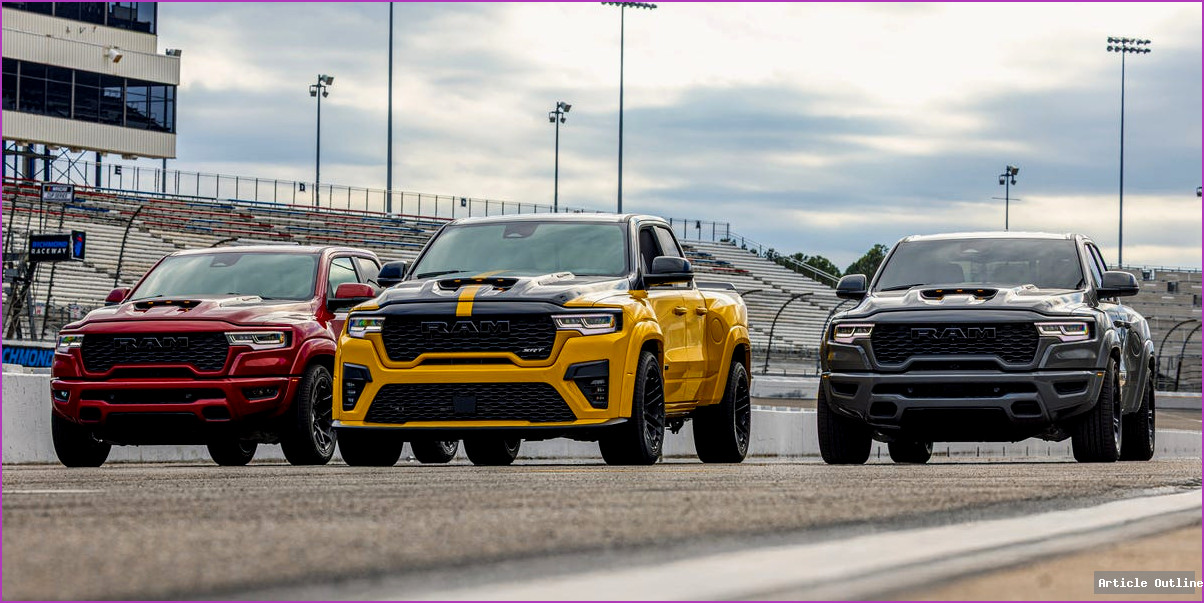
Let’s dissect why the Rumble Bee lineup matters, what most coverage misses, and what this means for the future of muscle trucks and American car culture.

Why This Matters
- Filling the Muscle Car Void: With the Dodge Charger and Challenger bowing out in their V-8 forms, the Rumble Bee family is engineered to capture those orphaned enthusiasts. This is Ram’s calculated attempt to seize a market segment left behind as the muscle coupe era fades.
- Street Truck Renaissance: The Rumble Bee SRT marks a return to high-performance street trucks—a market Dodge itself dabbled in with the Li’l Red Express and Viper-powered SRT-10, but which never fully caught on. Now, with performance trucks hotter than ever (just look at the Ford F-150 Raptor and Chevy Silverado ZR2), Ram is betting the time is right.
- Performance Meets Practicality: Unlike many muscle machines, these trucks can tow up to 8,890 pounds and carry nearly 1,200 pounds in the bed, all while offering supercar-like acceleration. It’s the Swiss Army knife of American horsepower.
What Most People Miss
- Engineering for Handling, Not Just Power: Ram didn’t just drop big engines into a standard 1500. The Rumble Bee SRT features a wheelbase a foot shorter than typical half-tons and a chassis tuned for street handling—with Bilstein adaptive dampers, air springs, and massive 325-section tires. This is as much about handling as it is about raw straight-line speed.
- A Trio for All Budgets: While the 777-hp SRT may grab headlines (and likely six-figure prices), the regular Rumble Bee with a 395-hp Hemi and the new-for-Ram 470-hp 392 Apache V-8 bring the formula to a broader audience. It’s a democratization of muscle—something the SRT-10 never managed.
- Unapologetically Loud in a Quiet World: As rivals double down on hybrid and EV trucks, Ram’s move is distinctly contrarian. This is a brand staking its flag on the primal appeal of V-8 noise and drama, at a time when most automakers are turning down the volume.
Key Takeaways
- Performance Numbers That Stun: The Rumble Bee SRT sprints to 60 mph in a blistering 3.4 seconds and claims a 170-mph top speed—shattering the long-standing SRT-10 truck record. Even the mid-tier 392 hits 60 in 5.2 seconds.
- Practicality Intact: Despite their muscle-truck credentials, the Rumble Bees retain class-leading interiors, usable beds, and the ability to haul and tow like any Ram 1500.
- Strategic Nostalgia: Ram is leveraging nostalgia for muscle trucks—but with the benefit of modern engineering, infotainment, and safety. This isn’t just a retro play; it’s a thoroughly modern performance machine.
How Does It Compare?
- Ford F-150 Raptor R: Also offers a supercharged V-8, but is off-road focused. The Rumble Bee SRT is unapologetically a street truck—lower, wider, and faster.
- Chevy Silverado ZR2: Focuses on off-roading; lacks the straight-line pace and handling tweaks of the Rumble Bee SRT.
- Tesla Cybertruck and Rivian R1T: Blazing fast, but silent and EV-based. The Rumble Bee is for those who want their performance with a side of thunder.
Timeline: The Rumble Bee Rollout
- Late 2024: 5.7-liter Hemi Rumble Bee goes on sale.
- Early 2027: 392 and SRT versions arrive, with Track Package details forthcoming.
Pros and Cons
- Pros:
- Unmatched performance for a street truck
- Practical towing and hauling
- Modern, upscale interiors
- Three V-8 options for different budgets
- Cons:
- Likely high price for SRT (six figures)
- No manual transmission option
- Out of step with EV trends—may have limited long-term appeal
The Bottom Line
The 2027 Ram 1500 Rumble Bee SRT is a shot of adrenaline to a segment going quiet. It’s a “hold my beer” moment for Ram and a love letter to those who believe trucks should roar, not whirr. While the market’s future is uncertain, this trio of street machines proves there’s still room for V-8 thunder in America’s driveways—if only for a little while longer.