When Car and Driver gathered thirteen of the fastest cars of 2026 on a 2.2-mile airstrip for an epic 0–150–0 mph showdown, it was more than just a spectacle—it was a bold statement about how far automotive performance has come, and where it’s headed.
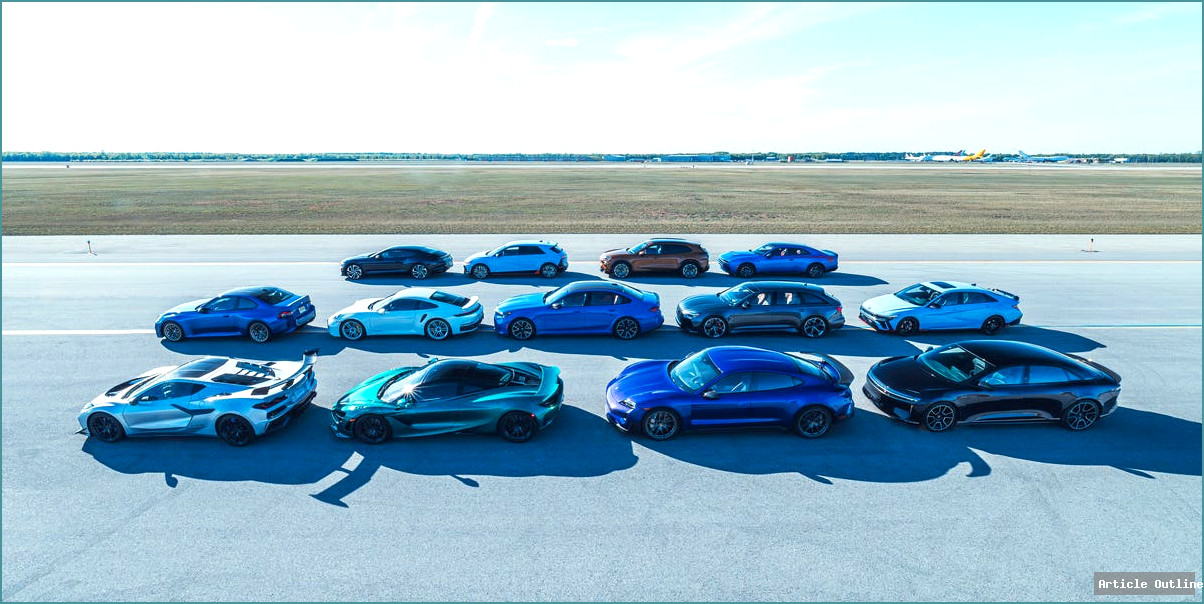
Forget the old benchmarks of 0–60. Today, even family sedans and SUVs can rocket past 100 mph with ease. The real test of a modern performance car is how quickly it can accelerate to ultra-high speeds—and, just as importantly, how confidently it can scrub all that velocity back to zero. This isn’t just about numbers; it’s about the sum of advanced engineering, driver skill, and safety technology converging at the bleeding edge.

Why This Matters
- Performance metrics are evolving: With so many vehicles now capable of hitting 150 mph, traditional 0–60 times have lost their bite as a differentiator. Testing 0–150–0 mph forces manufacturers to innovate on both ends—blistering acceleration and world-class braking.
- Safety and control are paramount: At these speeds, the ability to stop quickly isn’t just a bragging right—it’s a matter of life and death, and it pushes brake technology, tire grip, and electronic stability systems to their absolute limits.
- Electric and hybrid dominance: The 2026 lineup included not just gas-guzzling exotics, but EVs like the Porsche Taycan Turbo GT Weissach and Lucid Air Sapphire, and hybrids like the new plug-in BMW M5. Their instantaneous torque and regenerative braking are rewriting what’s possible in performance and control.
What Most People Miss
- It’s not just about horsepower: The lightest car isn’t always the fastest, and the most powerful car doesn’t always brake best. Factors like weight distribution, aerodynamics, tire technology, and even software tuning can dramatically impact results.
- Human reaction is a critical variable: As technical editor Mike Sutton noted, drivers had to anticipate the braking point—often starting to slow down when the speedometer read just 147 mph to account for human and mechanical delay. At this level, the mental game is as intense as the mechanical.
- Track surface matters a lot: The Oscoda airstrip’s lower traction meant that published 60-mph or quarter-mile numbers aren’t directly comparable to regular test tracks. It’s a real-world reminder that environment plays a huge role in high-speed performance.
Key Takeaways
- 0–150–0 mph is the new badge of honor for manufacturers—and a true stress test for the entire vehicle, not just the powertrain.
- EVs and hybrids are here to play—and win. The Lucid Air Sapphire (1,234 hp) and Porsche Taycan Turbo GT Weissach (1,019 hp) are now duking it out with legends like the McLaren 750S and Corvette ZR1X.
- Braking performance is now as sexy as acceleration. Massive carbon-ceramic rotors, advanced ABS, and smart electronic aids mean stopping power is more impressive—and more essential—than ever.
- The diversity of the lineup is stunning: From a $37k Hyundai Elantra N to a $441k McLaren 750S, the democratization of speed is real. You no longer need a hypercar budget to experience mind-bending acceleration and stopping.
Industry Context & Comparisons
- Historical leap: In 1998, only heavily modified tuner cars could reach 150 mph. By 2023, production sedans and SUVs like the Honda Accord and Hyundai Ioniq were in the club. In 2026, even family haulers like the Porsche Cayenne Turbo Electric are contenders.
- Braking technology revolution: Today’s carbon-ceramic brakes, torque vectoring, and regenerative systems are direct descendants of racing innovations from Formula 1 and Le Mans. Now they’re on street cars—and the difference is night and day.
- Safety implications: According to NHTSA, rapid deceleration is a major factor in crash survivability. The advancements on display here could be lifesaving if (when) they trickle down to everyday vehicles.
Timeline of the 0–150–0 Challenge
- 1998: First test—only tuners could play.
- 2023: Production cars dominate, including unexpected brands.
- 2026: EVs, hybrids, and combustion exotics battle it out, with SUVs and family sedans joining the fray.
Expert Commentary
“In the quicker cars especially, we were starting the stop sequence when the speed display crested 147 mph. In the time it takes your brain to make that connection… you’ve passed 150.”
— Mike Sutton, Car and Driver
That’s not just a quip—it’s a reminder that as vehicles become faster, the human element remains a limiting (and humbling) factor. The future may belong to AI-assisted driving, but for now, anticipation is everything.
Action Steps & Practical Implications
- If you’re shopping for a high-performance car, don’t just look at 0–60 times. Braking ability should be a top priority.
- Expect even more aggressive technology transfer from motorsports to road cars—especially as manufacturers seek to differentiate in the EV age.
- Watch for insurance and regulatory bodies to rethink safety benchmarks as ultra-high performance becomes mainstream.
The Bottom Line
The 0–150–0 test is more than a flex; it’s a window into the next era of automotive performance and safety. As electrification, hybridization, and software take over, the game is changing fast—and the winners will be the ones who can not only accelerate like a rocket, but stop on a dime. Buckle up: the future of speed is here, and it’s stopping faster than ever.
