The 2026 Mazda CX-5 is not just another update in a crowded compact SUV market—it’s a statement about what driving should feel like in the age of smart software and advanced safety. Mazda’s unwavering commitment to its ‘horse and rider as one’ (Jinba Ittai) philosophy is more than a marketing slogan; it’s a guiding principle that shapes every engineering decision. Let’s peel back the layers and see why this matters more than ever in today’s automotive landscape.
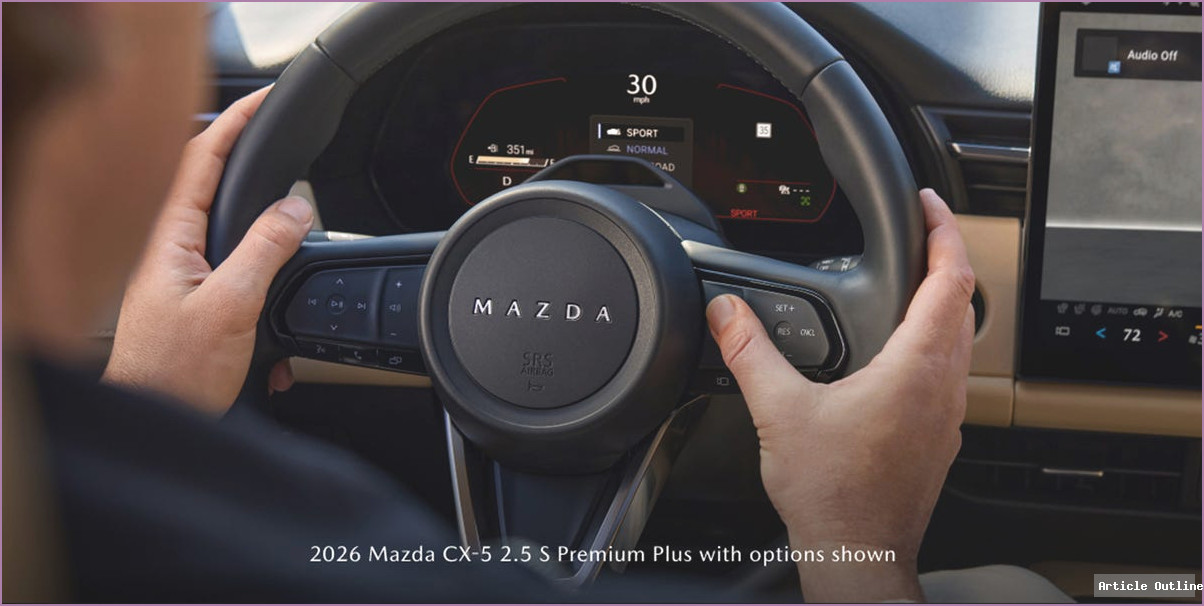
Most automakers tout better handling, smarter tech, and improved safety in their new models. But Mazda’s holistic approach intertwines these elements in a way few competitors can match. The CX-5 is engineered to anticipate your needs, not just react to them.
Why This Matters
- Proactive Control: The standard i-Activ AWD® system constantly monitors steering and throttle inputs, distributing torque before traction is lost. This means fewer heart-in-throat moments for drivers on slippery roads.
- Holistic Safety: Advanced driver assistance features work in harmony with the chassis, reducing fatigue and making safety feel like a natural part of the driving experience—not an annoying afterthought or nagging alert.
- Structural Confidence: Reinforced high-tensile steel creates a stiff, secure body that not only protects in a crash but also gives the CX-5 a poised, sporty feel in daily driving.
What Most People Miss
- Subtle Software, Big Impact: Mazda’s G-Vectoring Control Plus (GVC+) doesn’t just tweak torque and brakes for fun—it’s about micro-adjustments that make every corner feel smoother and more predictable. Many drivers won’t consciously notice it, but they’ll feel less tired and more confident, especially on long trips or twisty roads.
- Durability By Design: Because i-Activ AWD operates seamlessly and proactively, it reduces drivetrain stress—an unsung hero for long-term reliability and lower maintenance costs.
- Driver Support, Not Interference: The i-Activsense® suite is tuned to assist, not annoy. Unlike some systems that jerkily take over, Mazda’s interventions are smooth and supportive, easing the mental load of modern driving.
Key Takeaways
- Anticipation, Not Reaction: Most all-wheel-drive systems kick in after you slip. The CX-5 acts before you even notice a problem.
- Everyday Sportiness: The stiff chassis and smart software deliver a fun, planted feel without sacrificing comfort or safety.
- Integrated Safety: New features like lane-change assist and improved emergency braking are designed to work with the driver’s instincts, not against them.
- Long-Term Value: Less stress on mechanical parts and smarter tech means the CX-5 could be a reliability champ in its class.
Industry Context: How Does the CX-5 Stack Up?
- Against the Toyota RAV4: Toyota’s reputation is built on reliability, but its AWD and driver-assist systems often feel less engaging and more intrusive.
- Compared to Honda CR-V: The CR-V offers a softer ride, but lacks the same level of driver ‘oneness’ and sporty response that Mazda delivers.
- Volkswagen Tiguan & Hyundai Tucson: Great tech, but few match Mazda’s blend of subtlety and engagement.
Visual Summary: The CX-5’s Secret Sauce
- Jinba Ittai: Every touchpoint, from steering to braking, is calibrated for a natural, intuitive response.
- Smart Safety: Features like adaptive cruise, traffic sign recognition, lane-change assist, and emergency braking are standard or available.
- Stiff, Strong Chassis: High-tensile steel and reinforced joints make for safer, more spirited driving.
The Bottom Line
Mazda’s 2026 CX-5 proves that engineering for the driver—body, mind, and machine—still matters in an era of digital distractions and cookie-cutter crossovers. If you want an SUV that feels like an extension of yourself, not just another appliance, the CX-5 is speaking your language. In a segment plagued by sameness, it’s this pursuit of harmony between human and machine that sets Mazda apart.