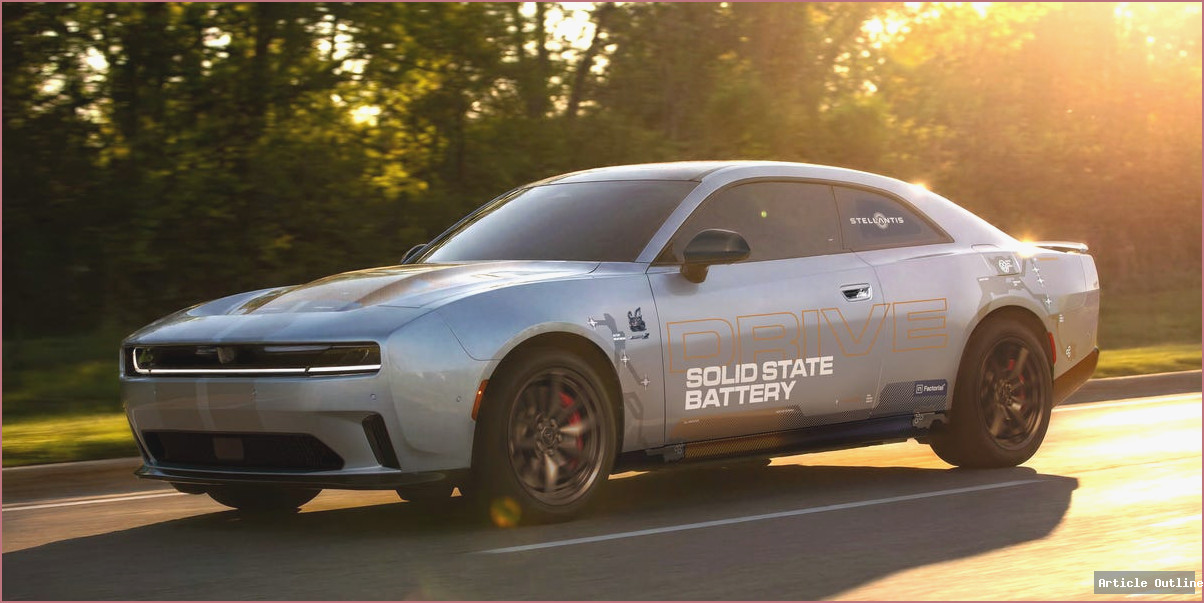
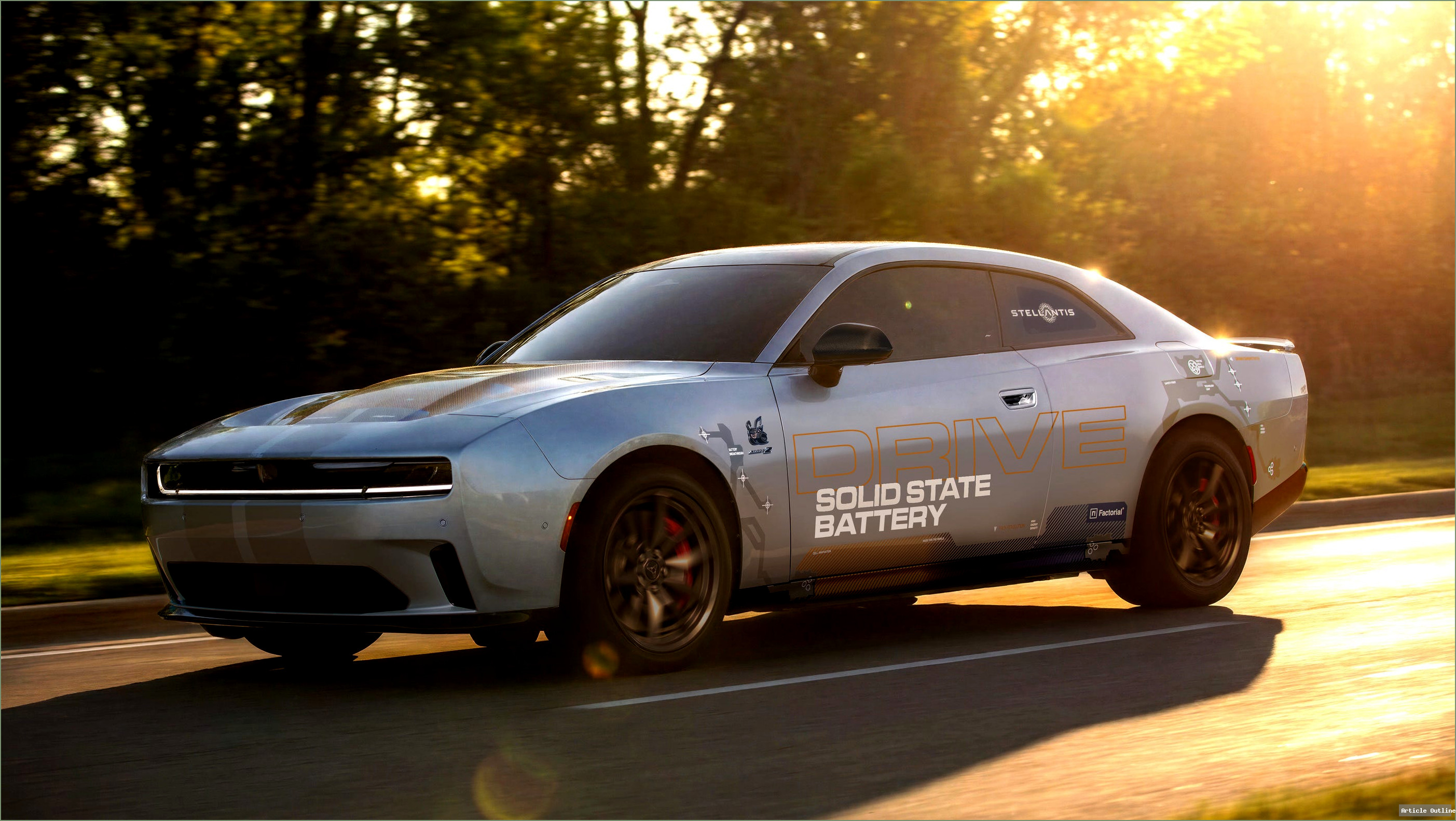
The electric vehicle landscape just got a serious jolt. Stellantis has begun real-world testing of a Dodge Charger Daytona fitted with Factorial’s cutting-edge solid-state battery cells. While the headlines might sound like ‘just another battery test’, this moment marks a meaningful leap in the race to bring solid-state technology from the lab into your driveway.
Let’s break down why this is a bigger deal than it first appears, what most people are missing, and what it could mean for the future of electric driving—especially for gearheads who crave both speed and range.
Why This Matters
- Solid-state batteries promise a revolution in EV performance and safety. Their higher energy density means more range without added weight, and their non-flammable electrolytes could end the era of EV fire scares.
- The ability to fast-charge from 15% to 90% in just 18 minutes could obliterate the biggest pain point for EV skeptics: charging wait times.
- Stellantis moving from lab prototypes to real-world, on-road testing is a classic point-of-no-return for any transformative technology.
What Most People Miss
- This isn’t just a tech demo—it’s a systems integration milestone. Stellantis didn’t simply swap battery packs; they engineered new mechanical architecture and reworked control systems to handle the FEST (Factorial Electrolyte System Technology) cells’ unique demands.
- The battery’s reliable operation in extreme temperatures (from -22°F to 113°F) is huge. Most battery breakthroughs stumble in real-world climates, but Factorial and Stellantis are targeting mainstream usability, not just lab glory.
- While the 375 Wh/kg energy density is impressive, it’s the combination of speed, safety, and durability that could enable muscle-EVs like the Charger Daytona to truly outshine their gas ancestors.
Key Takeaways
- Solid-state batteries may finally be moving past vaporware status. If Stellantis’ tests prove successful, expect a domino effect across the industry.
- Charging times and range anxiety—the two classic EV objections—could shrink dramatically in the next half-decade.
- Don’t expect to buy a solid-state Charger Daytona tomorrow. Stellantis hasn’t committed to a production launch date, but multiple automakers have targeted 2030 as the tipping point.
Industry Context & Comparisons
- Toyota, Nissan, and BMW are also racing to bring solid-state EVs to market, but most are still in the prototype or pilot phase.
- Current lithium-ion batteries typically offer 200–250 Wh/kg. Factorial’s 375 Wh/kg is a 50%+ leap—imagine a family EV with the range of a diesel sedan and charging as fast as a coffee break.
- Volkswagen and QuantumScape have made headlines, but have yet to hit the road with real-world solid-state test fleets in the US.
Pros & Cons Analysis
- Pros:
- Higher energy density = longer range or lighter cars
- Faster, safer charging
- Potentially lower long-term costs (fewer replacements)
- Cons:
- Manufacturing at scale remains a massive challenge
- Unknown long-term durability and cost curve
- Automakers must redesign EV architectures to fully leverage solid-state benefits
Action Steps & What’s Next
- Watch for updates from Stellantis and Factorial, as test results roll in over the next 12–24 months.
- If you’re shopping for a future-proof EV, keep your eye on solid-state developments—2028–2030 could be a game changer for your next car purchase.
- Automakers, investors, and enthusiasts should study how Stellantis engineers are adapting vehicle control systems—these lessons will shape the entire industry.
“True innovation isn’t just about a better battery—it’s about integrating breakthrough tech seamlessly into a car you actually want to drive.”
The Bottom Line
Stellantis’ Charger Daytona solid-state test isn’t just incremental progress—it’s the start of a new chapter for EVs. If successful, expect everything from muscle cars to minivans to benefit from faster, safer, and longer-range electric power. The next era of electric performance may finally be on the horizon—and this time, it’s not just hype.