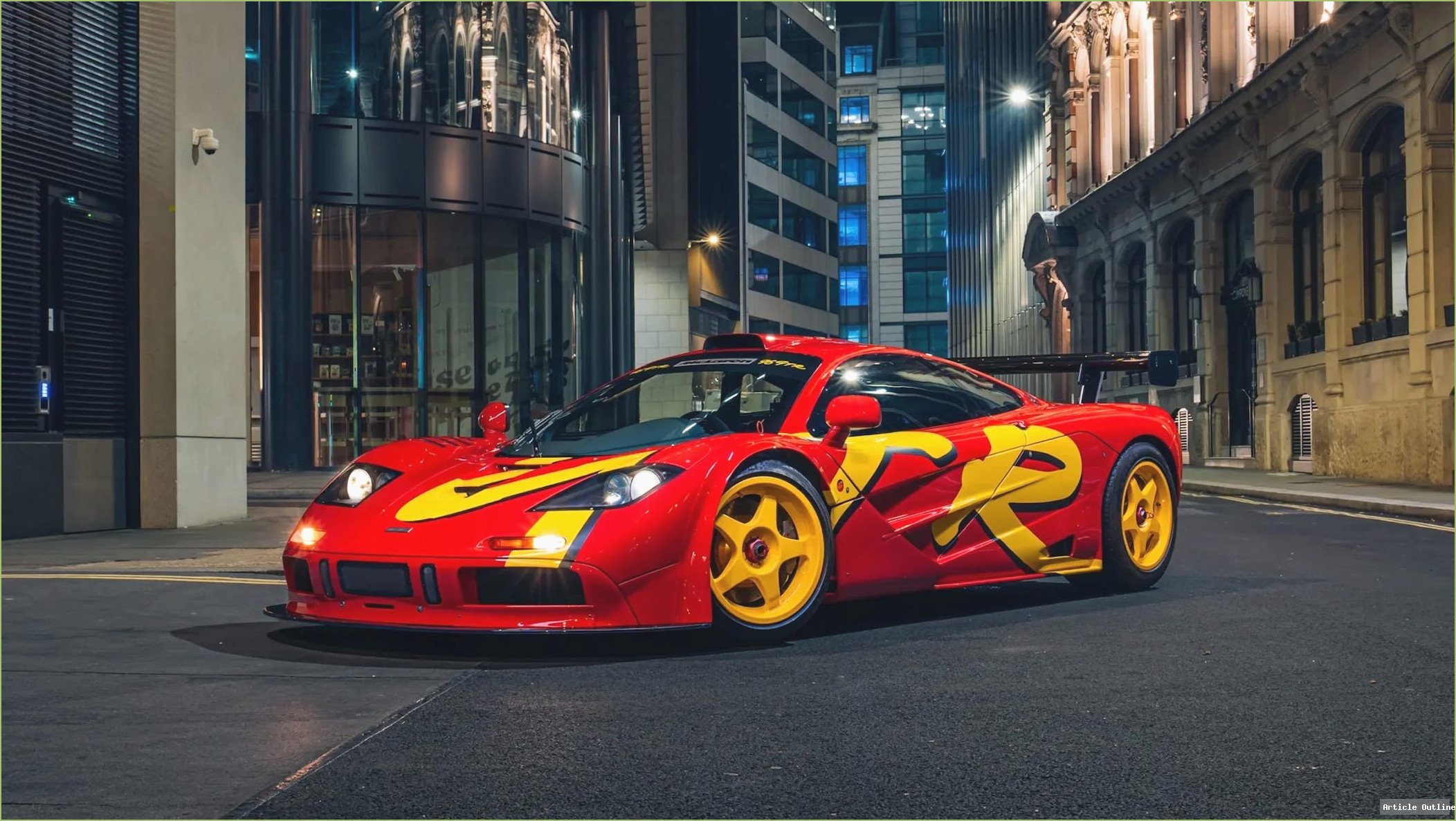
The automotive world is buzzing as a 1996 McLaren F1 GTR, with legitimate Le Mans pedigree, is set to hit the auction block at Monterey. With projections soaring past $35 million, this could become the most expensive McLaren F1 ever sold—and possibly one of the priciest supercars in history.
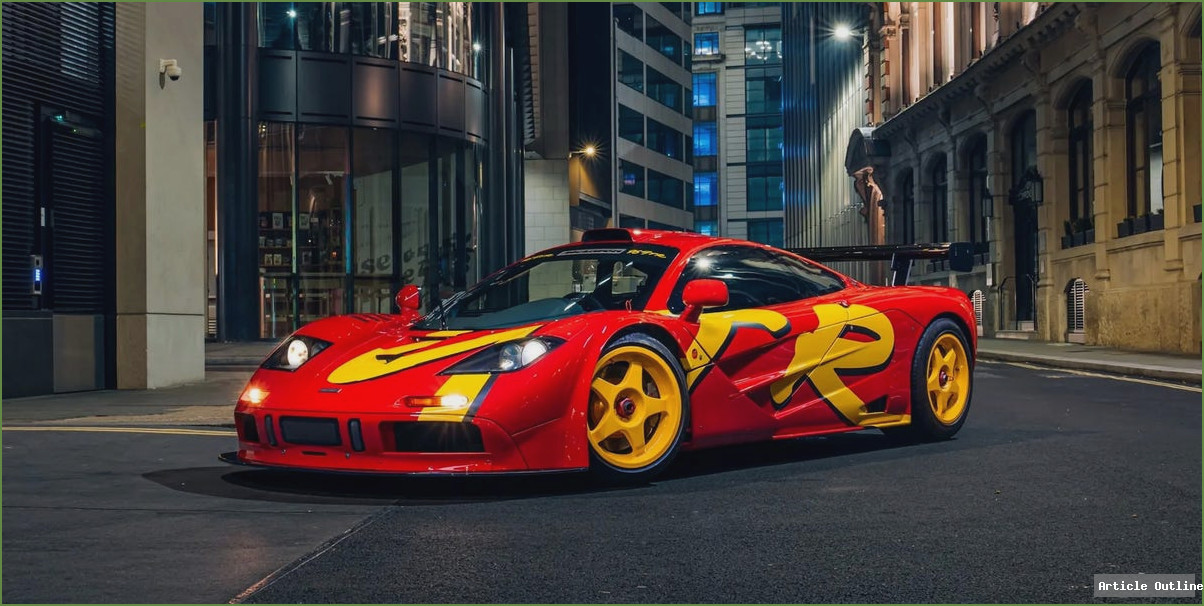
But this isn’t just a story about a fat price tag. It’s about heritage, rarity, and how the market is redefining what we value in automotive history.
Why This Matters
- A new ceiling for classic supercars: If the F1 GTR cracks $35 million, it redefines the upper limit for what modern-era cars—versus pre-war classics—can command.
- Shift from nostalgia to provenance: The McLaren F1 GTR is not just rare (with only nine built), but its Le Mans credentials and celebrity ownership (Nick Mason of Pink Floyd) make it a cultural artifact, not just a car.
- Changing tastes among collectors: Younger, tech-savvy billionaires now covet 1990s icons as much as 1960s Ferraris. The F1 is the perfect poster child for this generational shift.
What Most People Miss
- The F1 was never meant to race: Gordon Murray, McLaren’s chief designer, built the F1 as the ultimate road car. Racing was an afterthought—unusual for a car that would go on to humble dedicated race cars at Le Mans.
- It’s not just fast—it’s analog royalty: Unlike today’s hypercars with digital wizardry, the F1 GTR is a masterclass in mechanical purity: BMW-sourced 6.1L V12, six-speed manual, rear-wheel drive. No traction control, no paddle shifters, just raw connection.
- Celebrity provenance matters more than ever: Nick Mason isn’t just a famous owner. His stewardship, plus the car’s road-legal conversion by McLaren, adds a narrative investors crave.
Key Takeaways
- The F1 GTR, chassis 10R, is the rarest and most racing-pedigreed of all F1 variants—only nine GTR “longtails” exist.
- It’s one of the last series-production cars to win Le Mans outright (1995), a feat unlikely to be repeated in the modern era.
- Prices of McLaren F1s have doubled in the past decade, reflecting a growing recognition of their “blue chip” status.
How Does It Compare?
- Ferrari 250 GTO (1960s): The reigning auction king (>$70M), but from the pre-modern era.
- Porsche 959 and Ferrari F40 (1980s): Once rivals, but neither have the racing and technological impact of the F1.
- Modern Hypercar Market: LaFerrari, P1, Chiron—all faster on paper, but none command the mythology and scarcity of the F1 GTR.
Timeline: From Road Car to Auction Block
- 1992: McLaren F1 launches as the ultimate road car.
- 1995: F1 GTR stuns at Le Mans, takes overall victory.
- Late 1990s: F1 GTR chassis 10R is converted for road use, owned by Nick Mason.
- 2024: RM Sotheby’s prepares to auction the car, setting the stage for a record-breaking sale.
Pros and Cons of Investing in the F1 GTR
- Pros:
- Ultra-rare, with irreplaceable racing history
- Potential to appreciate further as the ultimate 1990s supercar
- Unmatched analog driving experience
- Celebrity provenance appeals to collectors and museums alike
- Cons:
- Sky-high maintenance and restoration costs
- Limited usability (it’s a race car at heart)
- Market risk: prices could plateau if collector tastes shift
The Bottom Line
The McLaren F1 GTR’s upcoming auction is more than just a high-stakes sale. It’s a bellwether for how we assign value to automotive legends in a digital age. As analog masterpieces become rarer—and as the next generation of collectors seeks cars with both stories and raw performance—expect the definition of “blue chip” collector cars to keep evolving.