When we talk about the origins of the automobile, most people picture dusty black-and-white photos, stiff inventors in frock coats, and a machine that looks more like a distant cousin of a baby stroller than a modern car. But the 1886 Benz Patent Motorwagen—widely considered the first true car—remains a living, sputtering testament to how far we’ve come, and just how wild the beginnings really were.
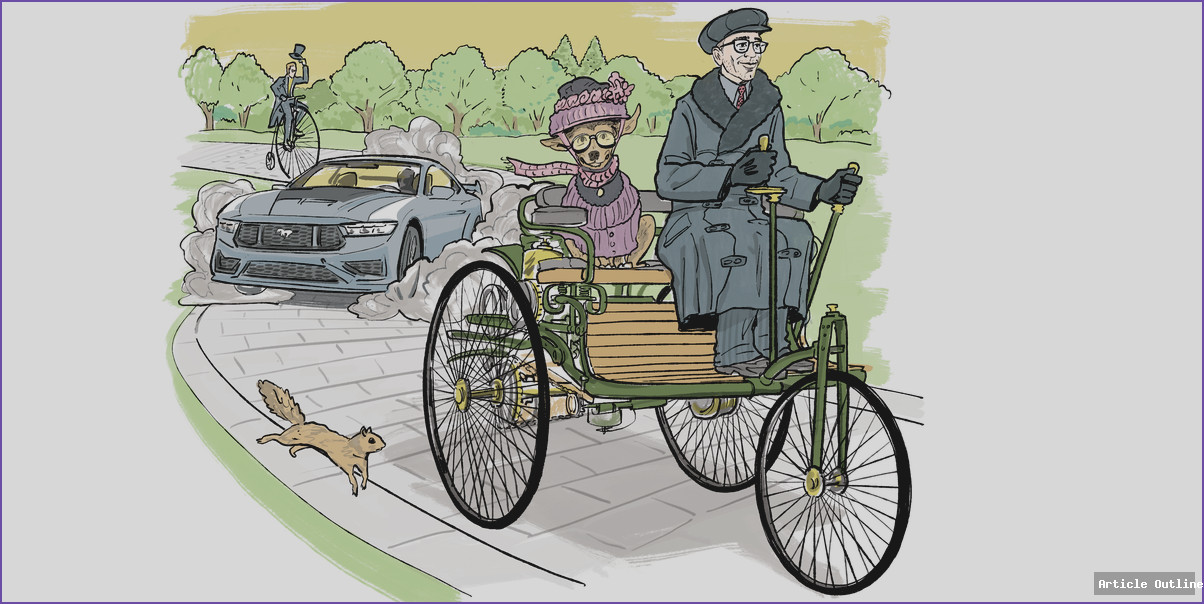
Sure, today’s cars can drive themselves, sync with your phone, and even parallel park while you sip your latte. Yet, there’s something electrifying about revisiting the era when nothing was taken for granted—not even the idea that a car should have four wheels, a steering wheel, or, you know, enclosed moving parts.
Why This Matters
- Innovation roots are messy, risky, and exciting. The Motorwagen wasn’t just a carriage with an engine; it was a ground-up reimagining of personal transport, at a time when the only thing people trusted to move them was a horse.
- Every modern car is built on lessons from these primordial experiments. The three-wheeled, open-crankshaft Motorwagen forced engineers to invent new solutions for stability, lubrication, and even comfort (or lack thereof!).
- It’s a reminder that ‘boring’ is engineered. Those wild, unpredictable early cars are why we expect today’s vehicles to be so safe, quiet, and reliable—even if that means sacrificing a bit of edge-of-your-seat excitement.
What Most People Miss
- The Benz wasn’t just a technical feat—it was a social earthquake. Imagine the first time neighbors saw this noisy, smelly contraption rolling down the lane at a blistering 13 mph!
- The open design was both necessity and feature. There were no safety standards, no enclosed crankcases, and certainly no cupholders. You greased parts yourself and prayed nothing flew off.
- Women played a pivotal role: Bertha Benz, Carl’s wife, famously took the Motorwagen on the world’s first long-distance drive, proving its utility and troubleshooting on the fly. (No, she didn’t have roadside assistance.)
Key Takeaways
- Design from scratch: The Motorwagen was not a retrofit. Its three wheels, lever-based controls, and exposed mechanisms forced the industry to invent entirely new solutions.
- Performance, redefined: 0.88 horsepower and a top speed of 13 mph sound laughable today, but it was revolutionary. For context, the average walking speed is 3-4 mph.
- Maintenance was personal: Drivers had to lubricate, adjust, and monitor everything. Today, that’s all handled by computers and sealed systems.
Comparison: Then vs. Now
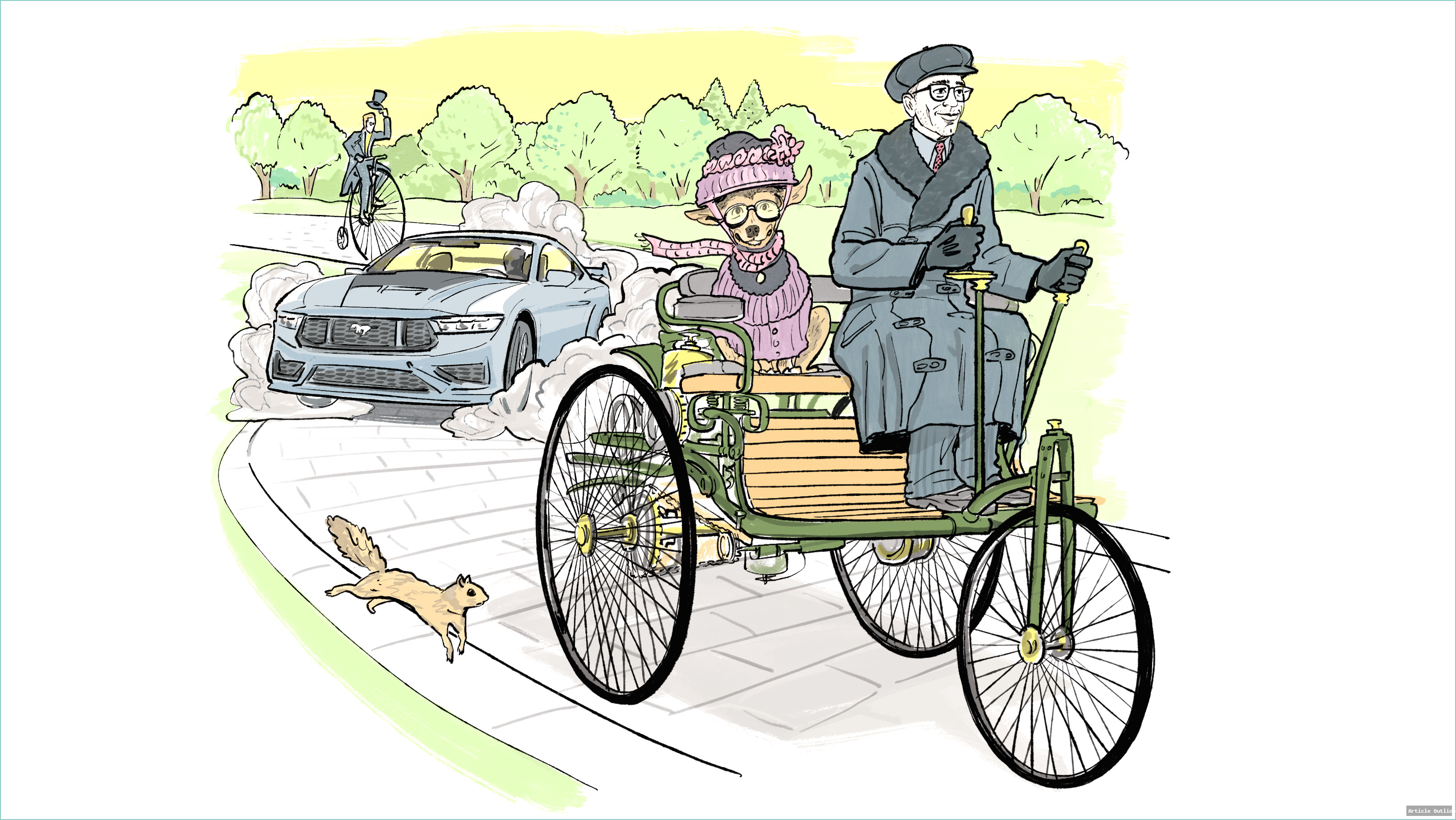
| 1886 Benz Patent Motorwagen | 2026 Ford Mustang Dark Horse |
|---|---|
| 0.88 hp, 13 mph top speed, open gears, hand-lubricated | 795 hp, 200+ mph, computer diagnostics, climate control |
| Start by spinning a flywheel | Push-button start, remote ignition |
| Steering lever (not a wheel!) | Multi-function steering wheel, drive modes |
Timeline: Major Milestones Sparked By the Motorwagen
- 1886: Benz Patent Motorwagen debuts
- 1888: Bertha Benz’s historic road trip proves viability
- 1894: First car race (Paris–Rouen) jumpstarts automotive competition
- 1908: Ford Model T launches mass production
- 1900s–1920s: Explosion of innovation—steering wheels, brakes, electric starters
Expert Perspective
“Driving a vehicle that old is disorienting, challenging, and sometimes dangerous. Boring hadn’t been engineered into the experience yet.”
— Tony Quiroga, Editor-in-Chief, Car and Driver
The Bottom Line
The Benz Patent Motorwagen isn’t just a museum piece; it’s a reminder that every modern car owes its existence to the weird, wonderful, and often precarious experiments of the past. If you ever get the chance to see one in action, remember: There’s a straight line from that open flywheel to the tech-packed cocoon you drive today. It’s history that still hums.
