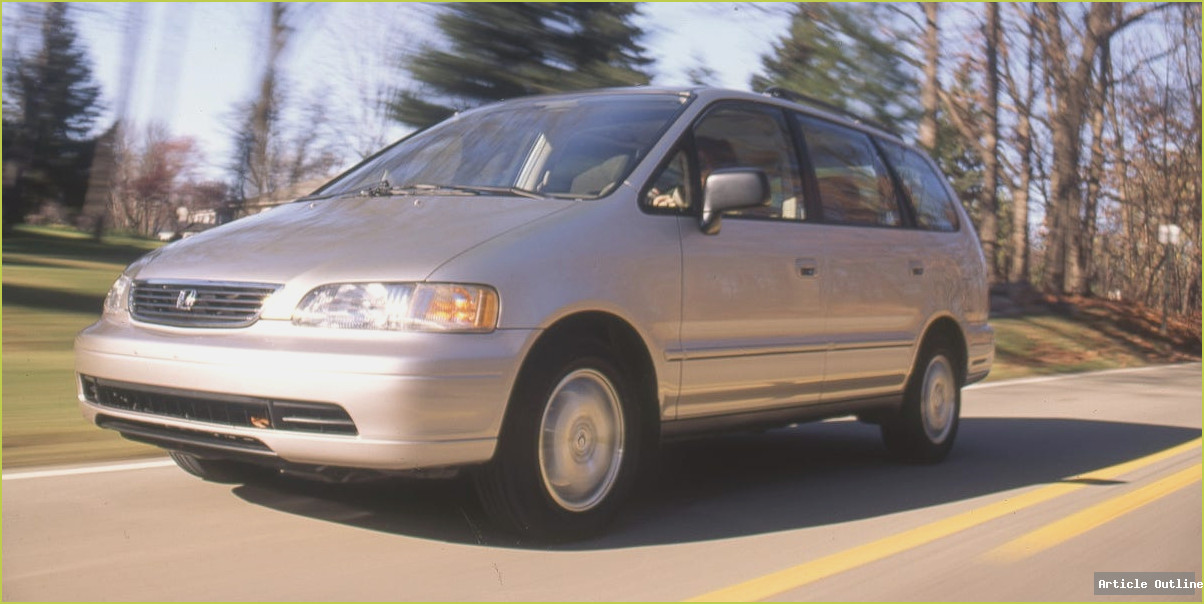
When Honda launched the 1995 Odyssey EX, it didn’t just introduce a new minivan—it sparked a debate about what a family vehicle could be. Honda insisted their creation wasn’t a minivan, but a “Premium Family Mover.” Was it denial, clever marketing, or a genuine attempt to redefine a segment? Nearly three decades later, the Odyssey’s debut offers fascinating lessons for today’s auto market.
Why This Matters
- Honda’s Odyssey challenged the “bigger is better” mantra of the American minivan market in the 1990s. At a time when Chrysler, Ford, and GM were locked in a size and power arms race, Honda zigged where others zagged, prioritizing agility and car-like handling over brute space and horsepower.
- The Odyssey’s Accord DNA set a template for crossovers that blend sedan-like dynamics with family-friendly utility—a formula that dominates today’s SUV and CUV landscape.
- It’s a study in market adaptation. Honda’s cautious, almost reluctant, entry into minivans shows how automakers read (and sometimes misread) consumer desires—a lesson still relevant as brands scramble to electrify fleets and chase the next trend.
What Most People Miss
- Honda’s “not-a-minivan” approach wasn’t just branding—it was a test of whether smaller, nimbler people movers could win over buyers overwhelmed by boxy behemoths.
- Ergonomics and space trade-offs: The Odyssey offered clever features (like a magic-folding third row and easy-to-remove captain’s chairs) but made real sacrifices in cargo space and third-row comfort. In a market obsessed with maximum capacity, this was a risky play.
- Powertrain limitations: Honda stuck to a four-cylinder engine, resisting the V6 trend. The result? Great fuel efficiency (EPA 20/24 mpg), but lackluster acceleration and passing power—echoing today’s debates over small turbo engines versus bigger, thirstier options.
Key Takeaways
- The Odyssey EX prioritized driving enjoyment and practicality over raw size, with best-in-class steering, tidy dimensions, and build quality that embarrassed rivals.
- Cargo and passenger compromises: With seats removed, it swallowed 51 beer cases—less than Nissan Quest (56) and far less than Ford Windstar (74). Officially a six-seater, the third-row was barely adult-friendly.
- Pricing reflected Honda’s premium aspirations: At $25,390 in 1995, the Odyssey EX wasn’t cheap. For comparison, a loaded Ford Windstar or Chrysler Town & Country offered more space for similar money.
Industry Context & Comparisons
- 1990s minivan wars: The segment was exploding—Chrysler sold over 500,000 minivans in the U.S. in 1994 alone. Honda arrived late, hoping to win over buyers who wanted sedan manners, not just a rolling living room.
- Legacy: The Odyssey’s early DNA—front-wheel drive, car platform, innovative seating—foreshadowed the crossover craze. Today’s CR-V and Pilot owe much to this “minivan that wasn’t.”
- Modern echoes: Automakers now take similar risks with “not-an-SUV” crossovers or “active wagons”—proving that vehicle identity is as much about perception as engineering.
Pros and Cons Analysis
- Pros:
- Superb handling and steering; feels more like a car than a van.
- Innovative seating—quickly removable captain’s chairs, magic-folding third row.
- Legendary Honda fit, finish, and reliability.
- Reasonable fuel economy for the era.
- Cons:
- Underpowered compared to rivals (0-60 mph in 10.7 seconds).
- Cramped third-row and limited cargo space with all seats in use.
- Some ergonomic quirks—awkward pedal placement, no tachometer, odd gear selector.
- High price compared to bigger competitors.
Timeline: The Odyssey’s Place in Minivan History
- 1988: Mazda MPV launches, the first “not-a-minivan” multipurpose vehicle.
- 1995: Honda Odyssey EX debuts, challenging minivan norms.
- Late 1990s-2000s: Odyssey grows in size and power, matching rivals, but retains car-based driving feel.
- 2020s: Crossovers dominate, but Odyssey remains a top minivan choice—testament to Honda’s original vision.
The Bottom Line
The 1995 Honda Odyssey EX was both ahead of its time and a bit out of step. It didn’t win the numbers game, but it drew a blueprint for the carlike, versatile family haulers that now fill American driveways. For buyers who valued nimbleness, quality, and thoughtful design over brute capacity, it was a revelation.

Ironically, Honda’s own Accord wagon (a mechanical sibling) offered a similar—and arguably even better—package for less money. But the Odyssey’s attempt to be “the minivan that isn’t one” paved the way for the SUVs and crossovers that followed. Today, when every automaker tries to be everything to everyone, the Odyssey’s focused approach feels refreshing—and worth remembering.