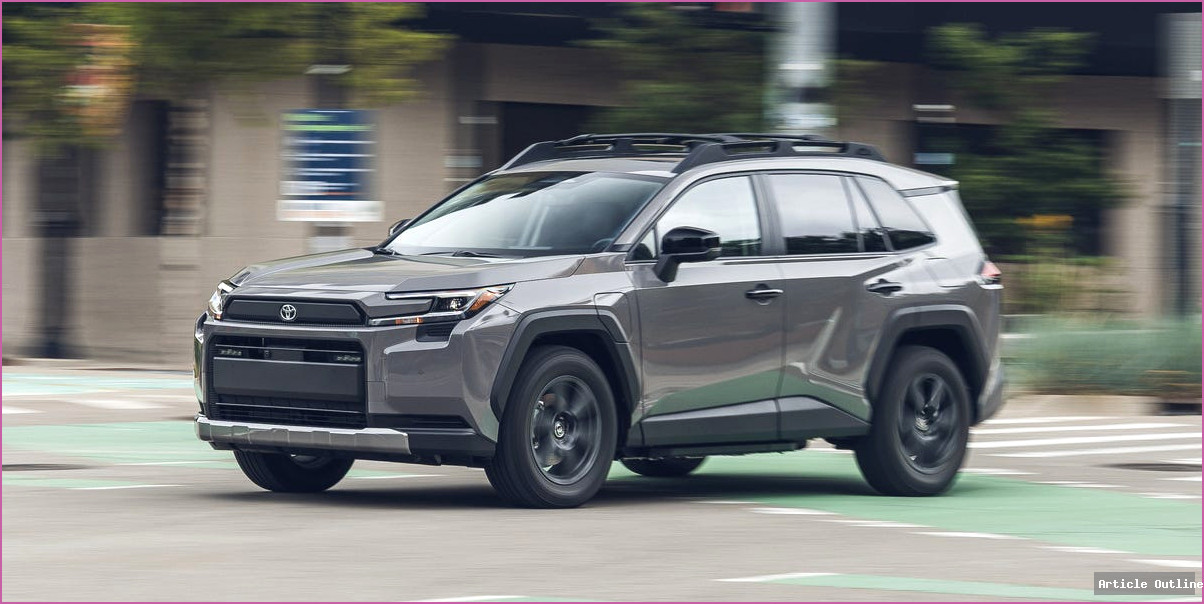
If you think the 2026 Toyota RAV4 Woodland PHEV is just another SUV playing dress-up in hiking boots, think again. Sure, this plug-in hybrid wears its adventure-ready design like a Patagonia jacket at a suburban coffee shop, but where it truly excels is in the daily grind—especially if your commute includes the moonscape roads of modern America.
Why This Matters
- SUV buyers crave a rugged look, but need real-world comfort and efficiency.
- The Woodland PHEV proves you can have both: style that hints at adventure, and performance that makes daily life easier.
Plug-in hybrids are supposed to bridge the gap between gas and electric, but few do it as seamlessly as this RAV4. With up to 49 miles of pure electric range and a 324-hp punch, it’s surprisingly quick, impressively quiet, and sips fuel when the battery’s depleted. It’s also built to take abuse from rough urban roads, not just forest trails.

What Most People Miss
- The ‘all-terrain’ tires look gnarly, but their tread is closer to all-season than mud-plugging off-roaders. This is a style choice—one that actually benefits road comfort and pothole protection.
- No real off-road hardware: no skid plates, no low-range gearing, and the extra ground clearance comes from tire sidewalls, not suspension mods.
- The magic is in the ride: fat sidewalls + forgiving suspension = a crossover that floats over battered pavement, making it the best RAV4 for real-world use.
Key Takeaways & Analysis
- 0–60 mph in 5.2 seconds: Not just quick for a hybrid SUV, but quick, period.
- EV Range: 49 miles (EPA)—enough for most commutes without burning a drop of gas.
- Highway test: 38 miles electric at 75 mph, 35 mpg on gas alone.
- Rides smoother than the sportier RAV4s, with less risk of wheel or tire damage.
- At almost $48,000 as tested, it’s not cheap. But the standard Woodland Hybrid costs $5,400 less—if you can live without the plug-in’s electric-only range.
Industry Context & Comparisons
- SUV ‘outdoor’ trims are everywhere—from Subaru’s Wilderness to Ford’s Timberline. Most, like the Woodland, offer more visual flair than trail-busting upgrades.
- RAV4 Prime vs. Competitors: The RAV4 PHEV’s electric range and speed outpaces rivals like the Ford Escape PHEV (37 miles EV, FWD only) and Mitsubishi Outlander PHEV (38 miles EV, slower acceleration).
- Real-world value: The Woodland PHEV is the ‘Goldilocks’ of the RAV4 lineup—comfortable, efficient, and quick, without the pretense of hardcore off-roading.
Pros and Cons
- Pros:
- Spicy acceleration and EV driving capability
- Handles rough roads with ease
- Well-equipped interior and tech
- Low noise, especially in EV mode
- Cons:
- Looks tougher than it is—off-roaders will want more
- Pricey compared to the non-PHEV Woodland
- Some hard plastics inside at this price point
Actionable Insights
- If you want an SUV that looks ready for the trail but actually excels in suburbia and city life, the Woodland PHEV is a smart buy.
- If you don’t drive far daily or don’t need EV mode, the standard Woodland Hybrid is a value play with similar comfort.
- Serious off-roaders should look elsewhere (think 4Runner TRD or Bronco), but for most, the Woodland PHEV’s formula hits the sweet spot.
The Bottom Line
Don’t judge this book by its cover. The 2026 Toyota RAV4 Woodland PHEV is less about conquering the Rubicon and more about making your daily drive—no matter how rough—effortless, quiet, and even a little bit fun. The rugged look isn’t just fashion; it’s a clever disguise for a crossover that’s finally as good to drive as it is to look at.