The 2027 BMW i3 is not just another badge-engineered EV. It’s a bold statement: BMW is done with half-measures, and the all-electric i3 is proof that legacy automakers can push boundaries without sacrificing what makes their cars special. So, why does this new i3 deserve a closer look, even if it wears a familiar suit?
Let’s dive beyond the spec sheet and explore what most reviews miss, why this car is a big deal for the EV market, and what you should really care about if you’re considering a premium electric sedan.

Why This Matters
- BMW has finally built an electric sedan that isn’t shackled by its gas-powered siblings’ compromises. Unlike the i4—which shoehorned an EV powertrain into a conventional body—this i3 is purpose-built on a platform optimized for electrification.
- A 450-mile estimated range and 112 kWh battery put it at the front of the EV pack, especially when compared to rivals like the Tesla Model 3 Long Range (333 miles) or the Mercedes EQE sedan (305 miles).
- 400 kW charging capability (if you can find a charger fast enough) means the i3 doesn’t just go far, it gets back on the road quickly—an essential for road-trip warriors and business travelers alike.
What Most People Miss
- This isn’t a re-skinned 3 Series: Only the front grille, mirrors, and maybe the door handles are shared. The i3’s stretched wheelbase, wider stance, and re-thought cabin layout prove BMW went back to the drawing board.
- The front motor is now an induction type, making it more efficient at speed due to lower drag when disengaged. That’s a geeky detail, but it pays off in real-world efficiency.
- The EV-specific software stack (“Heart of Joy”) manages throttle, regen, and braking in a tenth of the time the old BMW system needed. That’s not just tech for the sake of tech—it genuinely improves the driving experience.
Key Takeaways & Expert Commentary
- Performance without penalty: With 463 hp, 476 lb-ft of torque, and a 0-60 time around 4.2 seconds, the i3 keeps up with or outpaces its ICE and EV competitors—without the usual trade-offs in range or comfort.
- True BMW handling: Thanks to the low battery placement and expert chassis tuning (even without the M adaptive dampers), the i3 maintains the “Ultimate Driving Machine” legacy. That’s rare in the EV world, where added weight often dulls the fun.
- Luxury and practicality: The panoramic glass roof, expanded rear seat space, and tech-forward interior (with a 17.9″ central touchscreen and Panoramic Vision display) deliver a modern, premium experience—though some may miss the tactile satisfaction of traditional buttons.
- Value proposition: Starting at $62,850, the i3 undercuts similarly equipped luxury EV sedans, making it a tempting entry point for buyers who want BMW prestige and cutting-edge EV tech.
Industry Context & Comparisons
- EV range anxiety is real, but BMW is setting a new standard—the i3’s estimated 450 miles eclipses most mainstream rivals. That makes it one of the few EVs poised to unseat Tesla as the road-trip king.
- Charging speed is now a battleground: 400 kW charging dwarfs the Model 3’s 250 kW and the Polestar 2’s 205 kW. While public charging infrastructure still lags, BMW’s adoption of the NACS port is a nod to a more interoperable EV future.
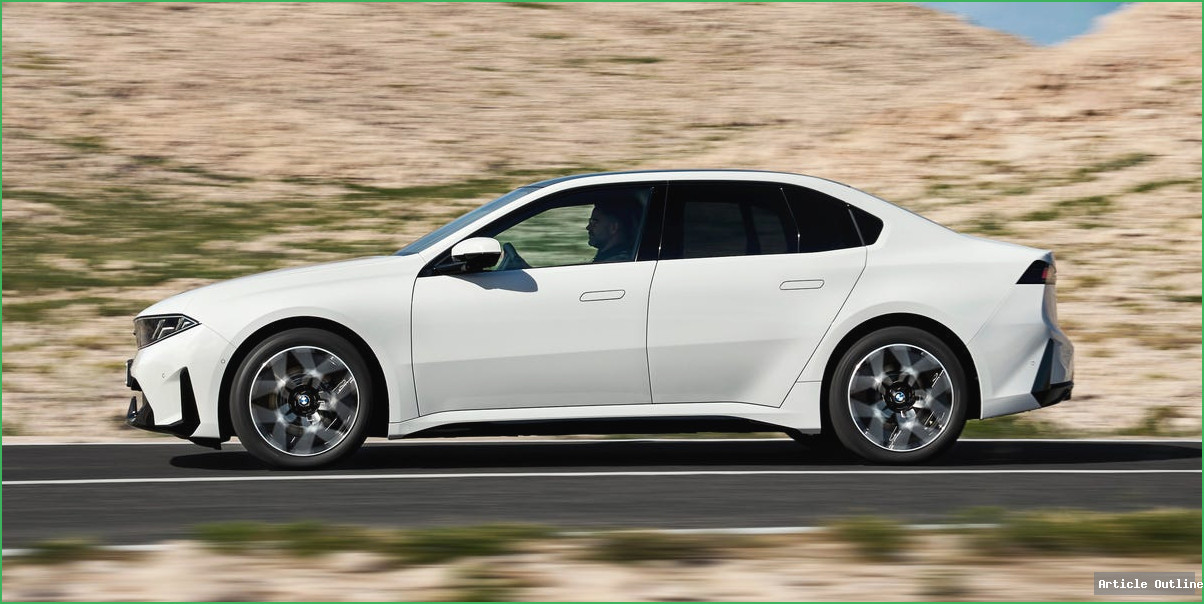
- The i3’s design is stealth wealth: It doesn’t scream “EV” with polarizing styling. Instead, it looks like a handsome 3 Series with subtle, sophisticated tweaks—a smart move for buyers who want to fly under the radar.
Pros & Cons
- Pros:
- Exceptional range and charging speed
- True BMW driving dynamics
- Spacious, modern interior
- Competitive pricing for the segment
- Cons:
- Steering feel not quite as communicative as ICE siblings
- Some controls buried in touchscreen
- Trunk slightly smaller than the M350
- Full charging infrastructure for 400 kW still limited
The Bottom Line
The 2027 BMW i3 isn’t just a 3 Series with a battery. It’s a ground-up rethink—combining industry-leading range, serious performance, and the kind of refinement that made BMW a household name. If you want an EV that doesn’t compromise on driving pleasure or practicality, the i3 deserves a spot at the top of your shopping list.
Timeline: The Evolution of BMW’s Electric Sedans
- 2022: BMW i4 launches—first attempt at an electric 3 Series alternative, but built on a shared platform with compromises.
- 2024: BMW commits to Neue Klasse EV architecture, signaling a shift to purpose-built electrics.
- 2027: The all-new BMW i3 50 xDrive debuts, showing BMW’s resolve to break free from ICE constraints.