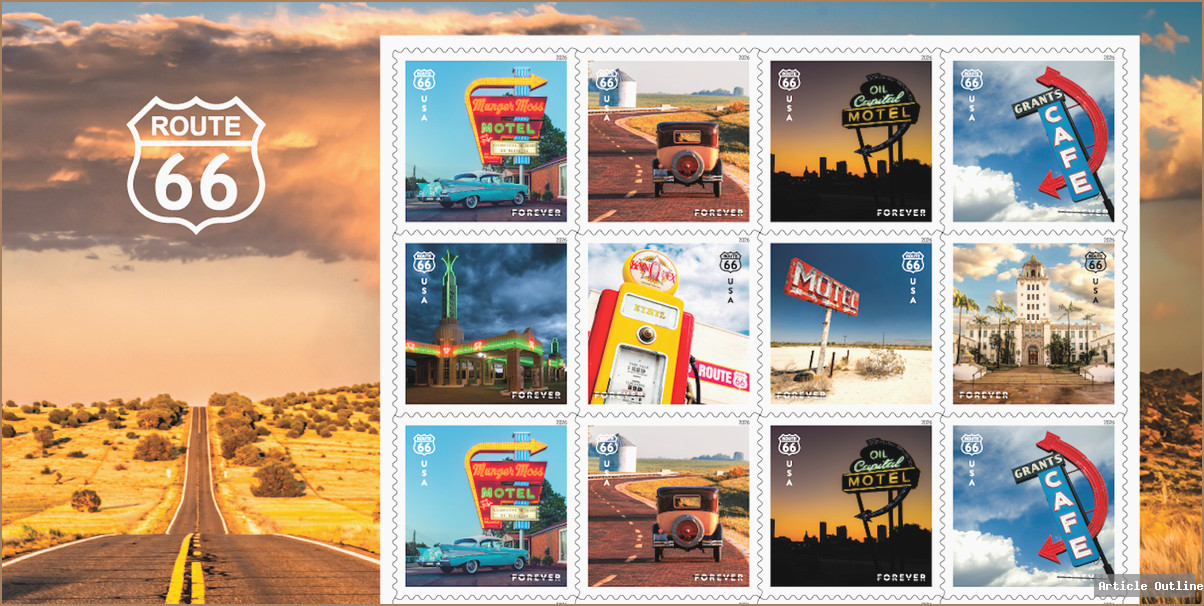
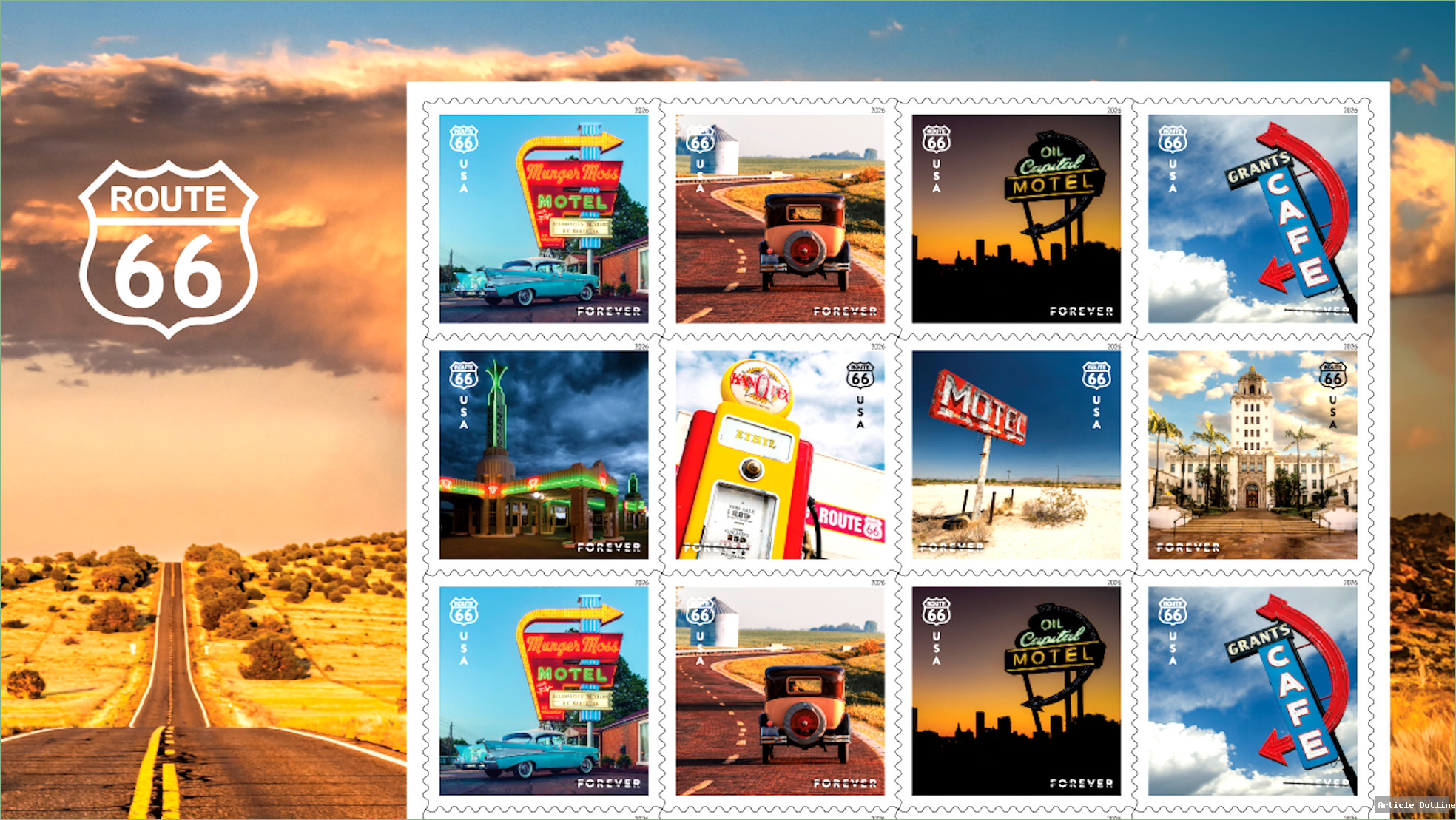
When the United States Postal Service (USPS) unveiled its new set of eight commemorative stamps for the 100th anniversary of Route 66, it wasn’t just a nod to the past. It’s a reminder of how a strip of asphalt helped shape America, connect communities, and define the open-road spirit that still captivates dreamers and adventurers. Let’s unpack why this centennial is more than just a milestone—and why these stamps matter now, perhaps more than ever.
Why This Matters
- Route 66 isn’t just any highway—it’s the original “Main Street of America.” Established in 1926, it linked Chicago to Los Angeles over 2,400 miles, catalyzing migration, business, and opportunity across eight states.
- USPS’s tribute comes at a time when both postage stamps and cross-country road trips are becoming rarer experiences. The stamps serve as a tactile, beautiful bridge between the analog past and our digital present.
- Commemoration is about preservation. Route 66’s legacy—though bypassed by interstates and officially decommissioned in 1985—still drives America’s mythology and tourism. The stamps are a subtle call to remember, revisit, and revitalize these forgotten roadways and the small towns they once sustained.
What Most People Miss
- Each stamp features a real site along the route, one from each state Route 66 crossed. This isn’t just a random photo set—it’s a curated journey. States represented: Illinois, Missouri, Kansas, Oklahoma, Texas, New Mexico, Arizona, and California.
- The decommissioning of Route 66 wasn’t the end, but the start of its legend. While modern highways replaced it, Route 66’s small towns, neon signs, diners, and motels became retro icons, celebrated in music, film, and art.
- The parallel between Route 66 and postage stamps is striking: Both were once vital connectors—one of people and goods, the other of messages and memories. Both now survive largely as symbols and collectibles, cherished by enthusiasts.
Key Takeaways
- The Route 66 centennial stamps are more than memorabilia—they’re conversation starters about America’s restless spirit and changing infrastructure.
- They highlight the importance of preserving American history—not just in museums, but in everyday items. Next time you mail a letter (or receive one!), consider the stories behind the stamps and the roads.
- Tourism along “Historic Route 66” remains big business. According to the National Park Service, Route 66 draws hundreds of thousands of international visitors annually, eager to experience a slice of Americana.
Extra Context & Industry Perspective
- After President Eisenhower signed the Federal-Aid Highway Act in 1956, the Interstate system gradually replaced Route 66. Interstates 55, 44, 40, 15, and 10 now cover much of its path.
- USPS faces declining mail volumes and financial challenges, but stamp collecting (philately) is seeing a renaissance among younger generations craving tangible, nostalgic artifacts.
- Other nations also commemorate their iconic roads—think of Australia’s Highway 1 or Germany’s Autobahn—but few match Route 66’s cultural cachet.
Pros & Cons of Commemorative Stamps
- Pros: Gorgeous artwork, historical education, supports USPS revenue, inspires travel and curiosity.
- Cons: Limited practical use in a digital era, can be overlooked as mere collectibles.
Action Steps & Practical Implications
- If you’re a collector or a traveler, grab a set of these stamps—they’re instant conversation pieces and might even rise in value.
- Support local economies on Route 66 by visiting and sharing your adventures—many towns depend on heritage tourism.
- Write a letter! Give someone the joy of receiving a physical piece of history.
“Get your kicks on Route 66”—and now, get your stamps too. It’s a small but meaningful way to keep America’s story rolling forward.
The Bottom Line
The USPS Route 66 centennial stamps aren’t just for collectors—they’re for anyone who believes in the power of journeys, nostalgia, and the enduring magic of the American road. In a world of instant everything, these stamps are a call to slow down, look back, and remember how we got here.
Sources: