Europe’s electric vehicle (EV) landscape is undergoing a seismic shift. In the first five months of this year, Chinese electric car brands captured a whopping 14.2% market share across Western Europe, according to Schmidt Automotive Research. That’s nearly one in every seven battery electric vehicles (BEVs) sold—a five-point leap from last year. But what does this mean for the industry, consumers, and policymakers?
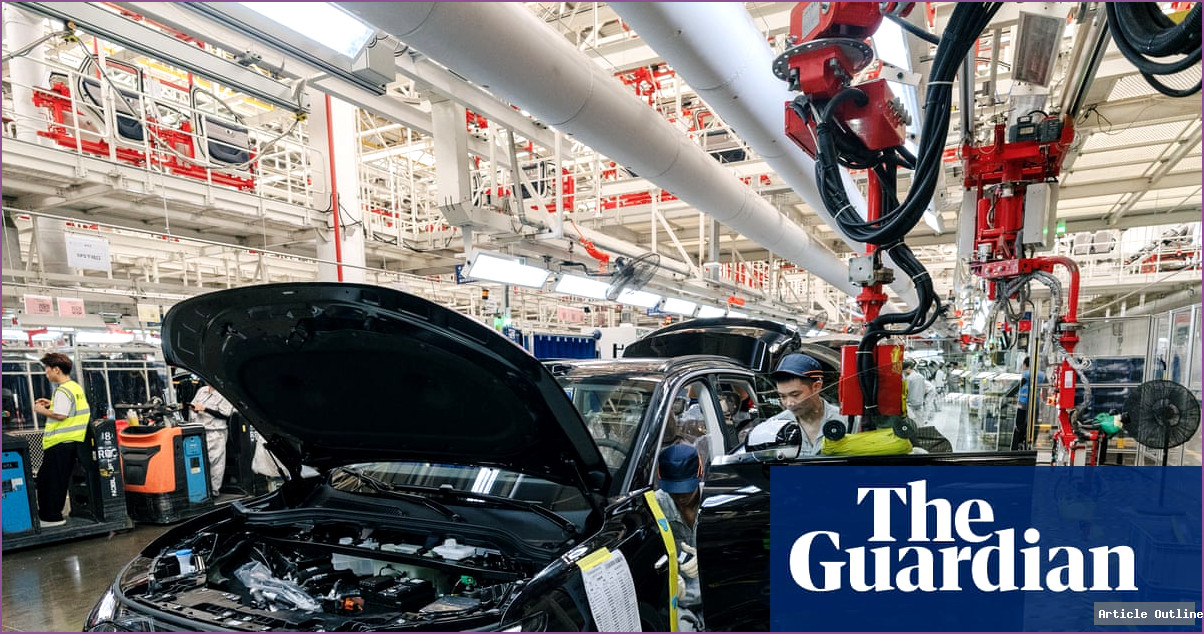
Let’s break down why this surge matters, the hidden dynamics at play, and what could happen next as the EU and UK wrestle with the specter of ‘dumped’ Chinese EVs and looming tariff wars.

Why This Matters
- Market Disruption: European automakers—longtime industry titans—now face fierce competition not just from Tesla but a wave of well-priced, feature-rich Chinese EVs.
- Policy Ripples: The rise in Chinese imports comes despite the EU slapping up to 35.3% tariffs on some brands (plus the standard 10% duty). The UK, by contrast, has avoided these extra levies, becoming the largest European market for Chinese EVs.
- Consumer Impact: European buyers are flocking to Chinese models for their affordability and range of options—over 120 different models launched this year alone, outpacing the 100 or so from European brands.
What Most People Miss
- Tariff Loopholes and Strategic Shifts: Chinese automakers are pivoting toward plug-in hybrid vehicles (PHEVs), which currently dodge the harshest EU tariffs. This could temporarily tilt the market as BEV growth plateaus.
- Subsidy-Driven ‘Anomalies’: Italy’s spike in Chinese EV sales is largely due to government subsidies, with Leapmotor’s T03 sold for as little as €5,000—rock-bottom pricing that European rivals can’t match.
- Shipping Constraints: Limited shipping capacity means Chinese brands must choose between sending BEVs or PHEVs. Expect more hybrids until the EU closes this loophole.
Key Takeaways
- Tariffs are shape-shifting the market, but not slowing China’s momentum as much as expected—at least for now.
- UK’s open-door policy (for now) makes it the Chinese EV capital of Europe, but this stance could change quickly under political pressure.
- Europe’s emission rules and consumer price sensitivity are creating a perfect storm for Chinese brands to thrive—until local production ramps up or new restrictions bite.
- Tesla’s comeback—with 60% year-on-year growth—shows that the market is big enough for multiple disruptors, especially as Model Y becomes Europe’s top-seller.
Industry Context: The Bigger Picture
- The EU and UK are locked in a balancing act: protecting domestic jobs and industries versus keeping EVs affordable and accelerating green targets.
- Chinese brands like BYD, Chery, SAIC, and Xpeng are betting big on Europe, even as political scrutiny and tariff threats intensify.
- Volkswagen and other European giants are calling for tariff parity—not just for BEVs, but also for PHEVs, to level the playing field.
- As the EU mulls extending tariffs and as local Chinese EV factories in Europe come online, the competitive landscape could shift again.
Timeline: How We Got Here
- 2024-25: Chinese EV market share in Europe hovers around 9.4%.
- Early 2026: Share jumps to 14.2%, spurred by UK and Italian market surges.
- Mid-2026: EU imposes 35.3% tariffs on some Chinese BEVs; UK holds off on extra levies.
- 2026-27 (Expected): EU considers closing PHEV tariff loophole and further market interventions.
The Bottom Line
The rise of Chinese EVs in Europe is more than just a market trend—it’s a flashpoint in global trade, industrial policy, and the race to electrify. The next 12 months will be crucial: Will European regulators slam the tariff door shut? Can legacy automakers innovate fast enough to hold their ground? Or will consumers vote with their wallets for value-packed Chinese imports?
One thing is certain—Europe’s EV market just got a lot more interesting.